I want to tell you about the first shark tooth I ever found on Caspersen Beach.
It was about the size of my thumbnail. Black as onyx. Perfectly triangular, with that unmistakable shape — one long point, two shorter points at the base — that you recognize immediately once someone has shown you what to look for.
I held it in my palm and just stared at it for a minute. Something about the weight of it. This tiny dark triangle that had been sitting in the sediment off the coast of Florida for millions of years, quietly waiting, while civilizations rose and fell and the Gulf changed its shape around it. And now it was in my hand.
I looked up. The Gulf was doing its thing — warm and green and completely indifferent. A heron was standing fifteen feet away, also doing its thing.
I put the tooth in my pocket and kept walking. Within twenty minutes I had found four more.
That’s Caspersen Beach. It’s not the beach you go to for a beach day. It’s the beach you go to for a treasure hunt. And the treasure is real; it’s millions of years old, and it’s there waiting for you in the dark sand at the water’s edge right now.
What Is Caspersen Beach?
Known as the Shark’s Tooth Capital of the World, the Gulf waters at Caspersen Beach have converging currents that deposit all sorts of sediment on the shallow drop-offs along the beach. At low tide, and particularly after a storm, the receding waters leave behind shells, small rocks, and a surprising number of fossilised shark’s teeth.
Caspersen Beach is a public county park beach in south Venice, Florida — about 20 miles south of Sarasota and 2 miles south of Venice Beach. The beach covers 177 acres of cabbage palms, sea grapes, and sea oats, and it was bought from the Caspersen family in 1986 for public use.
This beach has the feel of seclusion with no houses or development in sight — like “Old Florida” — but is located within the Venice city limits. Peaceful and serene, with pretty views everywhere.
It is also one of the most unusual beaches in Florida. The sand here is darker than the brilliant white quartz of Siesta Key. It’s mixed with shell fragments, rock pieces, and dark phosphate material — the same ancient sediment that has been washing ashore for thousands of years, bringing fossilized teeth and bones with it from prehistoric sea creatures offshore.
The beach stretches for nearly two miles. Two-thirds of it remains in its completely natural form. No condos. No resort bars. No jet ski rentals. Just the Gulf, the sand, the birds, and the fossils.
Important 2026 Update: How to Get There Now
Before you plan your visit, you need to know this. Most guides don’t mention it. It’s the most critical practical information about Caspersen Beach right now.
The main parking lot at Caspersen Beach is closed.
The Harbor Drive access to Caspersen Beach Park is closed until further notice. The park is currently open to pedestrian and bicycle access with no vehicle parking available.
Here’s what happened: During Hurricane Milton, Harbor Drive leading into the park was washed out. The beach, nature trails, pavilion, and overlook are open to the public. The playground, utilities, and restrooms will remain closed. The park is operating as a pedestrian and bicycle access-only park. Road repair has an anticipated completion of Fall 2026, though some estimates suggest 2–4 years depending on funding and conditions.
This means if you plug the old Caspersen Beach address into your GPS and drive there, you’ll find a washed-out road with nowhere to park.
Here’s how to actually get there in 2026:
Option 1: Park at South Brohard Park (Easiest)
1900 Harbor Dr S, Venice, FL
Park at South Brohard Park — free parking, right next door — and walk south along the shoreline. The walk to the main Caspersen stretch takes about 10–15 minutes depending on how quickly you move. Many visitors actually start finding teeth along the way.
As a bonus: Brohard Park is right next to Brohard Paw Park — the only dog beach in Sarasota County — so if you’re bringing a dog, you can split the day between both parks.
Option 2: Venetian Waterway Park Trail
Access via the Venetian Waterway Park Trail from the City of Venice Festival Grounds. This approach takes you through beautiful waterway scenery before reaching the beach. Great option for cyclists, or for anyone who wants a longer, more scenic arrival.
Bottom line: The beach is beautiful, the teeth are there, and the experience is fully worth the walk. You just need to know the workaround before you leave home.
The Shark Teeth: Everything You Need to Know
Why Are There So Many Shark Teeth Here?
This is the part that genuinely fascinates me. Why Venice? Why this specific stretch of Gulf Coast?
Caspersen contains Pliocene-Pleistocene fossils preserved in reworked Neogene deposits concentrated on the beach. Caspersen’s fossil beds were exposed through natural geological processes over thousands of years. Erosion by water, wind, and weathering gradually removed overlying sediments and revealed the fossil-bearing rock layers beneath. Rivers, streams, and coastal action continuously expose fresh specimens, making it a renewable collecting location.
The short version: there’s an ancient layer of phosphate-rich sediment offshore that has been slowly eroding for millennia. It’s full of fossilized remains from prehistoric creatures — primarily sharks — that lived in these warm waters millions of years ago. The Gulf currents carry this material to shore and deposit it on the beach, which is why teeth appear here constantly, renewed by every tide.
Sharks produce 20,000–25,000 teeth over their lifetime — they shed them constantly throughout their lives and grow new ones. Multiply that by millions of individual sharks over millions of years, and the math starts to explain why this beach has more fossil teeth per square foot than almost anywhere on Earth.
What Do Shark Teeth Look Like?
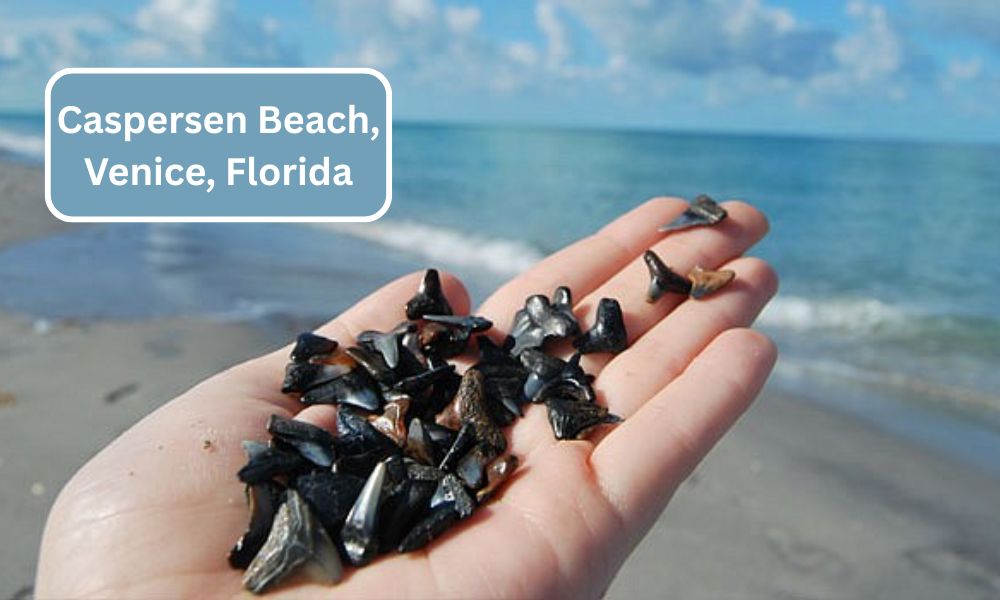
These warm Gulf waters were once home to giant sharks such as Carcharodon megalodon. Their fossilised teeth are distinctly triangular with one long point and two shorter points at the thicker base. They look like black onyx.
That description is exactly right. When you’re looking at the sand, you’re looking for something:
- Black or very dark grey (the fossilization process stains them)
- Triangular — unmistakably so
- Shiny — smoother surface than regular rocks
- Hard — if you think you’ve found a shark’s tooth, try to bend or break it. If it crumbles, it’s not a tooth — fossilized teeth are very hard.
Sizes range from tiny (smaller than your pinky nail) for juvenile or small species, to large (2–4 inches) for adult great whites and makos. The smaller ones are far more common. The large ones are the ones that make people stop breathing for a second.
What Other Fossils Can You Find?
Shark teeth are the headline, but they’re not the only thing washing ashore here.
Shells and mollusks are also found throughout the collecting area. Stingray barbs occur less frequently but have been discovered at Caspersen. Fossil fish bones, ancient ray plates, and occasionally prehistoric horse teeth have also turned up along this stretch. Every tooth and bone you find is millions of years old. That’s not a number that gets less astonishing no matter how many times you think about it.
The Best Technique for Finding Teeth
This is the part nobody tells you before your first visit, and it makes a huge difference.
Walk the waterline, not the dry sand. The teeth wash up at the tide’s edge. When a wave recedes, it leaves a thin dark line of heavy material — shells, rocks, and fossils — just at the waterline. That dark line is where you look.
Go slow. Most first-timers walk too fast. The teeth are small. The ones you find are the ones you stopped to actually look at.
Crouch down. Looking at the sand from standing height means you’ll miss most of what’s there. Get low. The angle of the light makes the dark triangles pop.
Use a mesh sifter. You can buy small hand-held mesh screens at shops in Venice or bring a kitchen strainer from home. Scoop a handful of sand and shell material from the waterline and let the water drain through. Look at what remains. This method is especially good for finding very small teeth.
Go further south. The further from the former parking area, the fewer other hunters you’ll encounter. The beach gets more productive the further south you walk, simply because fewer people make it that far.
Low tide is the prime window. Check tide charts at tide-forecast.com before you go. Low tide exposes the most material and gives you the widest strip of wet sand to search. A falling tide (the hour before low tide) is often even better than low tide itself.
After a storm. Fresh material gets pushed ashore by storm waves. The best day to go is the first calm morning after a rough weather day.
The Beach Beyond the Teeth
Here’s something interesting: even if you never find a single tooth (which won’t happen — you’ll find at least one within an hour), Caspersen Beach is still one of the most beautiful and peaceful stretches of Gulf Coast in Florida.
Swimming
The Gulf water here is warm, clear, and generally calm. The clear, clean water at Caspersen Beach is ideal for swimming and snorkeling. The waves are generally calm, making it safe for swimmers of all ages.
The beach doesn’t have lifeguards — this is a natural park, not a staffed county beach — so swim with awareness and keep an eye on conditions. Check the beach flag system before you get in the water; the flags at nearby Venice Beach apply to this stretch of coastline too. The beach flag guide covers what every color means in about two minutes of reading.
Wear water shoes in the shallower rocky areas near the tide line. The same rocky bottom that produces fossil material can be sharp underfoot.
The Nature Trail
There’s a pleasant ¾-mile nature trail winding through the mangroves and saltwater marshes that connects Caspersen Beach with the Venetian Waterway Trail. It’s a great place to spot crabs, herons, egrets, and other wildlife.
I love this trail. It feels completely removed from everything — even from the beach 50 yards away. The mangroves close in on both sides, the light comes through in stripes, and the wildlife just goes about its business around you. Great blue herons stand in the shallows. Fiddler crabs scatter as you walk past. Osprey circle overhead.
The trail connects to the Venetian Waterway Trail, so cyclists can make a whole loop of the area — beach, trail, waterway path, and back — without repeating any ground.
Wildlife Watching
Caspersen Beach is a genuinely excellent wildlife destination beyond the tooth hunting. Shorebirds are everywhere — sandpipers running ahead of the waves, willets digging at the waterline, black skimmers flying low over the water at dusk.
Dolphins appear offshore regularly, particularly in the morning hours before the wind picks up. Pelicans dive from height with their usual dramatic commitment. And the coastal hammock of sea grapes and cabbage palms that backs the beach is full of smaller bird species, especially during winter migration season.
Fishing
The rocky areas at the southern end of the beach, and the material washed up near the former jetty areas, create good habitat for snook, redfish, and a variety of smaller species. Anglers with a Florida fishing license can fish from the shore — no boat required. The Venice area as a whole has excellent surf fishing, and Caspersen’s natural, undeveloped shoreline offers access that the more populated Venice Beach doesn’t.
What to Bring to Caspersen Beach
Getting this list right makes the difference between a great tooth-hunting day and a frustrating one. Here’s everything that actually matters:
The tooth-hunting kit:
- A mesh sifter or fine kitchen strainer
- A small bucket, mesh bag, or zip-lock bag for your finds
- Water shoes for the rocky tide line (genuinely important)
The basics:
- Reef-safe SPF 50+ sunscreen — apply before you leave the car
- Water — bring more than you think you need (no concession on-site currently)
- Snacks — same reason; there’s no food vendor at Caspersen right now
- A hat with a brim
- Cash isn’t needed (everything is free)
The comfort items:
- A beach towel or blanket if you want to sit
- A small portable chair if you plan to stay for hours
- A dry bag or zip-lock for your phone (if you’re wading)
What not to bother with:
- An umbrella and beach chair setup (this is a walking, searching beach — not a lie-there beach)
- A cooler (unless you’re making a full day of it — totally reasonable, just know you’ll carry it)
When Is the Best Time to Visit Caspersen Beach?
Best Season: November Through April
The best time to visit is between November and April when the weather is perfect for outdoor activities.
This is when Sarasota’s Gulf Coast is at its most beautiful — temperatures in the 70s°F, low humidity, blue skies, and the kind of mornings that make you understand immediately why people relocate here. For shark tooth hunting, the winter and spring months also bring more consistent low tide windows in the cooler morning hours.
Best Time of Day: Early Morning
Arrive as close to first light as possible — or at 6 AM when the park opens. You’ll have the beach nearly to yourself. The light at low angle is actually better for spotting dark teeth against the sand. And the tide timing in Florida means that low tide often falls in the early morning hours during winter and spring.
By mid-morning on weekends, the beach is busier. By afternoon in peak season, you’re sharing the waterline with a crowd. Early is always better.
Best Conditions: After a Storm
I cannot overstate this. If there’s been rough weather — even just two or three days of wave activity — go the morning after it settles. Fresh fossils get pushed ashore in significant numbers after storms. Some of the biggest and best finds at Venice-area beaches have come in the 24 hours after a rough Gulf day.
Check the surf forecast and the tide chart together. When both align — morning low tide after a storm — that’s the Caspersen sweet spot.
Summer Visits
Summer (June–September) brings heat, humidity, and afternoon thunderstorms. The beach is quieter (far fewer visitors), and the tooth hunting is still productive. But arrive early and plan to leave by noon or 1 PM before the afternoon storm cycle begins. Bring extra water and a strong sunscreen — the UV exposure on an open beach in July is intense.
Nearby: Make a Full Day of It
Caspersen Beach on its own can fill a morning. Add these stops to build a full day in the Venice area.
Venice Beach
About 2 miles north, Venice Beach is the more developed, amenity-rich option. Amenities at Venice Beach include picnic facilities, restrooms, shelters, two sand volleyball courts, and a concession open for breakfast and lunch. It’s Blue Wave Beach certified, a mark of cleanliness and good management. The iconic sail-style pavilion — built in 1964 — is a landmark worth seeing.
After a morning at Caspersen, Venice Beach gives you the restrooms, the food, and the shade facilities that Caspersen currently lacks.
The Venice Fishing Pier fully reopened in September 2025 after a $400,000 reconstruction with new Brazilian hardwood decking. The pier reopened following a complete rebuild and is now one of the best fishing and sunset-watching piers on the Gulf Coast.
Downtown Venice
Downtown Venice is one of the most charming small downtowns in Florida — walkable, Italian Renaissance-influenced architecture, independent shops, and good restaurants within easy walking distance of the beach. It’s the ideal lunch destination after a morning of tooth hunting.
The Venice Area Audubon Rookery
A short drive from the beach, the Venice Area Audubon Rookery is a small park with an observation boardwalk over a pond where hundreds of wading birds roost. Great blue herons, great egrets, roseate spoonbills, and anhingas nest here in concentrations that are genuinely staggering. It’s free, it’s 15 minutes from Caspersen, and it’s one of the best bird-watching spots in Florida.
Caspersen Beach with Kids
This beach was made for kids who like finding things. And that’s basically all kids.
The concept of “going to find shark teeth” is more exciting to a child than almost any other beach activity. It gives them a mission. They’ll walk further, concentrate harder, and stay engaged longer than they would at a typical beach day.
A few tips for bringing kids:
- Give them their own sifter and bag. Ownership of the equipment dramatically increases investment in the hunt.
- Lower the bar for success. Even a tiny tooth, smaller than a pencil eraser, counts as a find and should be celebrated accordingly.
- Water shoes for everyone — the rocky tide line is not ideal for bare feet.
- Bring water and snacks. There’s no food on-site right now, and a hungry child who hasn’t found a tooth yet is a specific kind of difficult.
- Let them walk as far south as they want. The further south, the better the hunting — and kids with a mission will walk surprisingly far.
For more family-friendly activities to build a full Sarasota-area day around, the best things to do in Sarasota with kids has the full picture — from Sarasota Jungle Gardens to Siesta Key and everything in between.
What to Wear to Caspersen Beach
Caspersen Beach calls for a specific kind of outfit — not your St. Armands Circle sundress situation, but your actual searching-for-ancient-fossils-at-the-water’s-edge situation. They are different things.
For the hunt:
- Clothes you don’t mind getting wet and sandy
- Water shoes or secure-strap sandals (bare feet on rocky areas = bad)
- A rash guard or lightweight long-sleeve top for sun protection if you’re staying for hours
- Shorts or quick-dry pants that you can wade in
For after:
- A change of clothes in the car is a good idea. Between the sand, the salt water, and the time you’ll spend crouched at the waterline, you’ll want fresh clothes for lunch in downtown Venice.
For the full breakdown of what to wear across different Sarasota-area beach situations — from a fossil hunting morning to a Fifth Avenue dinner — the what to wear in Sarasota guide has every scenario. And if you’re planning a beach-to-lunch transition after your morning at Caspersen, the beach to brunch outfit guide has the exact formulas that make it seamless.
Caspersen Beach vs. Other Sarasota Beaches
Caspersen is genuinely different from every other beach covered in the best Sarasota beaches guide. Here’s the honest comparison:
| Siesta Beach | Lido Beach | Turtle Beach | Caspersen Beach | |
|---|---|---|---|---|
| Sand | Cool white quartz | White sand | Coarse, shell mix | Dark, fossil-rich |
| Best for | Swimming, sunbathing | Beach + dining | Shelling, kayaking | Fossil hunting |
| Amenities | Full | Full | Basic | Currently minimal |
| Crowds | High (peak) | High | Low | Very low |
| Wildlife | Good | Good | Good | Excellent |
| Parking | Free, 950 spaces | Paid, 400 spaces | Free, 207 spaces | Currently closed |
| Vibe | Classic beach day | Beach + town | Quiet escape | Nature & adventure |
Planning Your Visit
If Caspersen Beach is part of a larger Sarasota or Gulf Coast trip, the Sarasota vs. Naples guide is a useful resource for deciding how to split your time across the region.
For accommodation decisions — whether to stay in Venice, on Siesta Key, or in downtown Sarasota for easy access to everything — the Airbnb vs. hotel guide for Florida trips walks through the decision honestly.
And if you’re building a multi-day Sarasota itinerary around events, beaches, and restaurants, the Sarasota events 2026 guide and the best Sarasota restaurants guide give you the full picture of what this city has to offer beyond the beach.
Final Thoughts
Caspersen Beach is not a pretty postcard beach. It doesn’t have the brilliant white quartz of Siesta Key or the amenities of Lido Beach. The parking is complicated right now. The restrooms are closed. The sand is dark and full of shells and rock fragments.
And it’s one of the best beaches in Florida.
Because nowhere else can you crouch down at the water’s edge and hold something in your palm that is literally millions of years old. Something that was part of a living creature in a warm prehistoric sea long before any human being walked this coast. Something that has been carried here by the Gulf, one wave at a time, for all of recorded history.
That’s the Caspersen Beach experience. It’s not a day at the beach. It’s a conversation with deep time.
Park at South Brohard. Walk south. Go slow. Look for black triangles at the waterline.
You’ll find something. You always do.
For more Sarasota beach guides, local tips, and Gulf Coast inspiration, visit Belle on the Boardwalk.

Welcome to my blog!
Meet Hannah Katherine, the creative voice behind Lifestyle, a blog dedicated to finding beauty and balance in everyday living. A former interior stylist turned full-time content creator, Sophie blends her love for cozy home design, mindful travel, and self-care into heartfelt stories that inspire readers to slow down and savor the little moments..