I’m going to be straight with you about something.
When Ryan and I decided to move from Atlanta to Sarasota in December 2023, I did what any reasonable person does: I researched the weather. I looked at the average temperatures. I watched YouTube videos of people walking on Siesta Key in January. I thought about the fact that we were escaping a city where February could genuinely be miserable and landing in a place where the Gulf of Mexico exists as a daily backdrop.
What I did not fully absorb — despite technically reading it — was the information about Florida summers.
Our first summer here was a revelation of the humbling kind. June arrived, and I thought, okay, it’s hot, I’ve lived in the South my whole life, I understand heat. Then July arrived, and I genuinely questioned some life choices. Then August arrived, and I was doing our beach walks at 7 AM because by 9 AM the pavement was too hot for Basil’s paws, and I was profoundly damp from humidity before reaching the end of the block.
But here’s the thing. We survived. More than that — we found a rhythm. We found the good parts of Florida summer that nobody really talks about, because the conversation about this season tends to get stuck at “it’s really hot” without ever getting to the genuinely wonderful stuff that happens on the other side of accepting that reality.
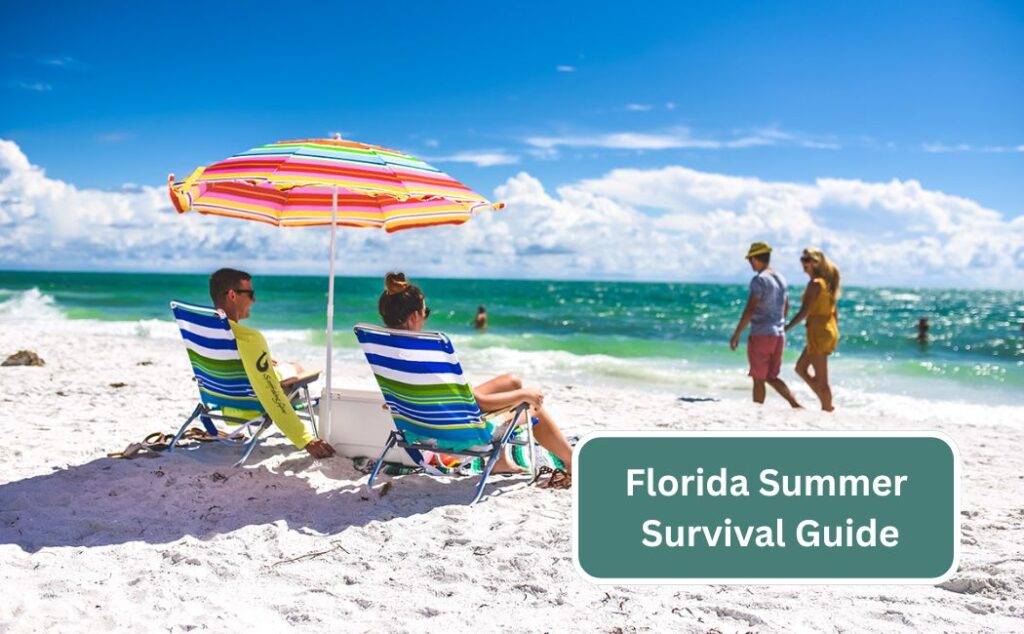
This guide is what I wish I’d had going into our first Gulf Coast summer. Not the things you already know — wear sunscreen, drink water — but the actual insider information about how to structure your days, what’s secretly wonderful about summer here, and how to make the next three months feel like a season you chose rather than one you’re enduring.
First, Let’s Be Honest About What Summer in Florida Actually Is
Before we get into the good stuff, let’s set accurate expectations, because going in with the right mental model makes everything easier.
Florida summer is not the summer you grew up with if you’re from anywhere north of Georgia. It is not the summer of long, pleasant evenings and mild afternoons. It is a subtropical climate experience that involves the following: heat indexes that regularly exceed 105°F, humidity levels hovering between 70–90%, a “sauna effect” created by the combination of high ambient temperatures and near-saturation humidity, and afternoon thunderstorms that arrive with the punctuality of a well-run transit system.
Here’s the truth that most people miss: daily high temperatures in Sarasota often aren’t dramatically higher than those in major Northeast cities like New York or Philadelphia during the same time of year. What wears you down is the humidity — not the heat. Florida frequently ranks as one of the most humid places in the U.S., and a 90°F day at 90% humidity feels completely different from a 90°F day at 40% humidity.
Meteorological summer in Florida — characterized by intense heat and high humidity — typically stretches from early May through late October, making it a six-month season rather than the three months the calendar suggests. By the time October arrives, you’ll understand why every Floridian gets genuinely excited about the first 80-degree afternoon that feels cool.
The afternoon thunderstorms deserve their own mention because they’re one of the most misunderstood features of Gulf Coast summer. Florida’s wet season doesn’t mean constant rain — it means daily 30-60 minute thunderstorms that arrive predictably around 3–5 PM, then clear. These storms are often dramatic and fast. The sky goes dark, lightning illuminates the Gulf, the rain comes down hard, and then — frequently within an hour — it’s over. The air smells clean. The temperature drops a few degrees. And the evening opens up, washed and golden.
This pattern, once you understand it, actually becomes the rhythm your summer is built around. And it’s more manageable than it sounds.
The Fundamental Shift: Stop Fighting the Clock
The single most important change I made after our first Florida summer was adjusting how I live my day.
The two best windows for outdoor activity in a Florida summer are early morning — when the sun is up, temperatures are rising but not yet brutal, and humidity is starting to drop from its overnight peak — and evening, after 6 PM, when temperatures are falling, and UV exposure is decreasing. The middle of the day — roughly 11 AM to 5 PM — is when you go inside. This is non-negotiable if you want to feel good.
What this looks like in practice:
The early morning hours are genuinely magical. I’m talking 6:30–8:30 AM. The Gulf has this quality in summer mornings that I could try to describe but would probably just make you want to experience it: a soft, flat light that turns the water silver-gold, a stillness that the afternoon heat hasn’t broken yet, an almost total absence of other people. Basil and I do our long walks now. I take my coffee to the water. We kayak before the sun has found its height.
These early hours are not a concession. They’re some of the best hours of the Florida day.
The afternoon is for indoors, and Sarasota has genuinely excellent indoors. More on this in a moment.
The evening is for everything else. Dinner out. The farmers’ market in the evening breeze. The Sunday drum circle at Siesta Key. A sunset walk. The hours between 6 PM and sunset are often the most beautiful hours of the entire day, and in summer, sunset doesn’t arrive until nearly 8:30 PM. That’s a long, slow, gorgeous evening.
Once you restructure your day around this framework, Florida summer stops feeling like something to endure and starts feeling like a genuinely different way of being — one with built-in pauses, built-in beauty, and a rhythm that the rest of the country doesn’t have access to.
The Surprising Perks of Florida Summer (Yes, Really)
Nobody writes the positive case for Gulf Coast summer, so let me make it.
The Tourists Go Home
Florida’s Gulf Coast summer is effectively off-peak season, and Miami Beach’s price premiums can drop from 45% to just 15% during summer months. The same applies here. The crowds that pack Siesta Key from November through April? They think dramatically. The parking lot at Brohard Paw Park, which requires a 7 AM arrival strategy in peak season, is accessible at a leisurely 9 AM in July. Restaurant reservations at places that are booked three weeks out in January are available same-day in August. The farmers’ market has elbow room. The yoga class has spots.
Sarasota in summer is, in many ways, the version of Sarasota that actually belongs to the people who live here. And there’s something genuinely wonderful about that.
The Water Is Perfect
Summer is when the Gulf of Mexico reaches its most beautiful swimming temperature — ocean temperatures hit 85°F or above during peak summer, which means getting in the water isn’t a bracing act of willpower but a genuine relief. You float, you drift, you don’t want to get out. The Gulf in July feels like a warm bath that you paid nothing for. This is not a small thing.
The Light Is Extraordinary
Something happens to Florida light in summer that photographers talk about, and that takes a while to really see. The clouds that build for afternoon thunderstorms create conditions that make mornings and evenings visually extraordinary. The cloud formations before a storm are dramatic in a way that flat-sky days never produce. The golden hour after a storm has a washed, luminous quality that I’ve never encountered anywhere else. Summer here produces some of the most beautiful light of the year, and it’s available every single day.
The Prices Drop
Hotels in Sarasota can be 20–40% cheaper in summer than during the peak winter season. If you’re visiting from out of town, summer represents a real financial advantage. If you live here, it means your favorite restaurants are accessible without the season’s premiums on everything from dinner reservations to parking.
The Afternoon Rain Is Genuinely Cathartic
I know this sounds like I’ve lost the plot, but hear me out. There is something specific about the experience of watching a summer thunderstorm roll across the Gulf from a covered porch with a cold drink that is one of the most distinctly Florida experiences there is. The sky goes from blue to dramatic gray in about twenty minutes. The lightning over the water is spectacular. The sound of heavy rain on a metal roof is meditative in a way that’s hard to explain. And then it stops, and the world is clean, and the temperature has dropped four degrees, and the evening begins.
Ryan and I started deliberately finding porches to watch storms from. It became a summer ritual. I recommend it.
The Summer Day Blueprint
Here is the actual schedule that works for Gulf Coast summer — the one I’ve landed on after a full year of figuring this out.
6:30 – 9:00 AM: Outside time. Beach walk or dog beach visit, kayaking, farmers market on Saturday mornings, outdoor yoga if you practice it, gardening, anything that requires being in the elements. The UV index in June, July, and August regularly reaches 11+ on many days — the “extreme” category — and unprotected skin can begin to burn in as little as 15 minutes. Sunscreen goes on before you leave the house. Every single time.
9:00 AM – 12:00 PM: Transition. Farmers’ market ends early enough to do it in the coolest part of the morning. Coffee shops, errands, work from home, any indoor activity that benefits from morning energy.
12:00 – 5:00 PM: AC-only hours. This is not laziness. This is the correct choice. In July and August, the heat index between noon and 5 PM regularly exceeds 105°F. Being outside during these hours is genuinely uncomfortable and potentially dangerous if you’re exerting yourself. Use this time — every single day — for the things you love doing indoors.
5:00 – 8:30 PM: The best part of the day. The storm usually passes by 5 or 6 PM. The temperature has dropped. The light has changed. The evening opens up. This is when dinner happens, when the drum circle gathers on Sunday evenings, when the waterfront restaurants fill up, when the air feels like something you want to be inside rather than escaping.
The Indoor Game: What Makes Sarasota’s Summer Actually Rich
Here is where Sarasota reveals itself as genuinely unusual among Gulf Coast cities. Because when the afternoon heat forces you inside, you’re not choosing between Netflix and a mall. You’re choosing between actual cultural institutions that would be remarkable in any city.
The Ringling Museum
The Ringling Museum of Art is one of the best summer destinations in Sarasota — you can spend time walking outside to enjoy the Florida sun, then get out of the heat to enjoy the interior art exhibits, making it truly the best of both worlds. The 66-acre bayfront estate with its Baroque art collection, Circus Museum, and Ca’ d’Zan mansion is a full-day experience. The Summer Circus Spectacular showcases circus artists from around the world in a kid-friendly show, with flying trapeze acts, comedians, and aerial silk artists running through the summer. On Mondays, the art galleries are free to the public.
My summer Ringling rhythm: arrive at 9 AM when it opens, spend an hour in the bayfront gardens while it’s still cool, move inside to the Museum of Art when the heat builds, eat lunch at the on-site café, and leave by 1 PM before the full afternoon heat arrives.
Sarasota Art Museum
The Sarasota Art Museum’s summer 2025–2026 season includes “Lillian Blades: Through the Veil” — an immersive labyrinth of mixed-media “veils” with reflective surfaces, activating the space with bouncing light and color, running June through October 2025. Beginning August 31, the museum presents “Art Deco: The Golden Age of Illustration,” celebrating the 100th anniversary of the Art Deco movement with 70 rare posters from the Crouse Collection. These are serious exhibitions in a world-class facility, and they’re genuinely wonderful ways to spend a summer afternoon.
Mote Marine Laboratory & Aquarium
The Mote Marine Laboratory and Aquarium is one of the best places in Sarasota for visitors and residents alike — conveniently located close to City Island, it’s a great refuge if you’re enjoying some time outside and need a break from the heat. For anyone who has become a diver or snorkeler (and after the PADI certification journey I wrote about here, we absolutely count), spending time in Mote’s tanks looking at the species you encounter on local dives is a remarkable experience. The shark tank, the sea turtle recovery program, the touch tanks — all of it is genuinely excellent and entirely air-conditioned.
Florida Studio Theatre
Summer theatre in Sarasota is not a diminished version of the regular season — it’s a distinct season in its own right. The Sarasota Opera House hosts shows virtually every Thursday, Friday, and Saturday night throughout June, with films and other events running through the rest of the summer. Florida Studio Theatre presents full seasons of comedy, drama, and new works. Catching a performance on a hot summer evening — air-conditioned theater, glass of wine at intermission, dinner afterward when the heat has broken — is one of the great summer pleasures of living in Sarasota.
Savor Sarasota Restaurant Week
Savor Sarasota Restaurant Week happens every June, and it’s one of the best-timed events of the year for residents — prix-fixe menus at the city’s best restaurants, during the month when the tourists have thinned, and you can actually get a reservation. We look forward to this every year and have discovered several restaurants during Savor Sarasota that became regular favorites.
The Heat Survival Basics (Done Properly)
I know you know the basics. But the Florida-specific version of them is different from what you know.
Sunscreen is not something you apply once. Florida’s summer UV index reaches 9–11+ on most days, putting it in the “very high” to “extreme” category — and skin can begin to burn in as little as 15 minutes in June, even on overcast or breezy days. I apply SPF 50 before leaving the house. I carry reef-safe SPF 50 in my beach bag and reapply every 90 minutes outdoors, more if I’ve been in the water. This is not optional. It is also not enough on its own — a hat with a real brim and a UPF-rated shirt for long outdoor mornings are your best additional tools.
Hydration is different in Florida. When the humidity is high, sweat doesn’t evaporate as quickly, which prevents your body from cooling itself efficiently. You need more water than you think, earlier than you think. If you wait until you’re thirsty, you’ve already waited too long. I keep a large insulated water bottle in the car year-round, but especially in summer, and I drink from it before I’m thirsty, not after. Electrolytes matter too — coconut water, a pinch of salt in your water, or a proper electrolyte supplement on high-activity days.
Paw protection is real and urgent. For those of us with dogs, you should avoid asphalt at peak hours, as urban surfaces radiate heat long after the sun hits them. The five-second rule for pavement temperature applies to dog paws: if the back of your hand can’t hold contact with the pavement for five seconds comfortably, it’s burning your dog’s feet. Our entire dog-walking schedule shifted to before 8:30 AM and after 6:30 PM from May through October. Basil adjusted. His feet thanked us.
The heat acclimatization is real. This one surprised me more than anything else. By August of our first year, I was meaningfully more comfortable in the heat than I’d been in June. Your body actually adapts to high heat and humidity over weeks of consistent exposure — your sweat rate increases, your cardiovascular system becomes more efficient at cooling you, and your perception of the heat shifts. Locals who have lived here for years don’t experience the same heat that a newcomer does in their first summer. Hold on. The acclimatization happens.
The Hurricane Reality Check
No Florida summer survival guide is complete without an honest conversation about hurricane season.
Hurricane season runs June 1 through November 30, with the highest storm activity typically occurring in August and September. I’m not going to catastrophize this — Sarasota has genuine geographic advantages over much of Florida’s coasts, and most hurricane seasons pass without significant direct impact on the Gulf Coast. But preparation is not optional, and is not panicking. It’s being a responsible resident of a place that sometimes gets hurricanes.
Here’s what we do: we keep a hurricane kit assembled from June 1 through the end of November. It includes bottled water (one gallon per person per day, minimum three days), non-perishable food, a hand-crank weather radio, flashlights and extra batteries, important documents in a waterproof bag, and cash. We know our evacuation zone (check the Sarasota County official website — it’s based on address). We have a plan for where we’d go and with whom.
The rest of the time, we don’t think about it. The Gulf Coast is beautiful and worth living on, and preparation is the thing that lets you live here without anxiety rather than with it.
What I Actually Look Forward to Every Summer
After a full year of Gulf Coast summers, here is the honest list of what I genuinely love about this season — not the concessions I’ve made to it, but the things I’d actually miss.
The early morning beach. I have never, in my life, been a morning person. The Florida summer made me one. The beach at 6:45 AM is one of the most beautiful things I have experienced, and I get it nearly to myself.
The post-storm evening. The hour after a summer thunderstorm on the Gulf Coast is specific and irreplaceable — the color of the light, the clean smell, the temperature drop, the particular quality of the quiet after rain.
The Sunday drum circle. Every Sunday evening before sunset, on Siesta Key Beach. The heat has broken. The tourists who don’t know about it have gone. The sky is doing something extraordinary. The drums build in layers, and the whole thing feels like an event that’s been happening since before you arrived and will continue long after you leave.
The summer produce. The Sarasota Farmers Market in summer is the moment when Florida produce is at its most abundant: watermelon, cantaloupes, tomatoes, corn, tropical fruits that don’t exist anywhere near this quality in January. June marks when watermelons and cantaloupes are in season and ripe for the picking. I eat better in the summer than at any other time of year.
The Sarasota that belongs to locals. The restaurants you actually love are easier to get into. The beaches are quieter. The farmers market flows instead of presses. The whole city breathes differently. Summer is when Sarasota stops performing for visitors and just exists for its residents, and I have come to love that version of this place deeply.
I want to be honest about something one more time: Florida summer is hard. Anyone who tells you otherwise is selling something or has fully acclimatized in a way that takes several years. The heat is real, the humidity is humbling, and the adjustment period is genuine.
But there’s a version of Gulf Coast summer that is genuinely rich, genuinely beautiful, and genuinely yours in a way that the peak-season months — crowded, expensive, slightly frantic — never quite are. It took me a full summer to find it. I hope this guide helps you find it faster.
See you at the 7 AM beach. I’ll be the one with the too-large hat and the very happy golden retriever.