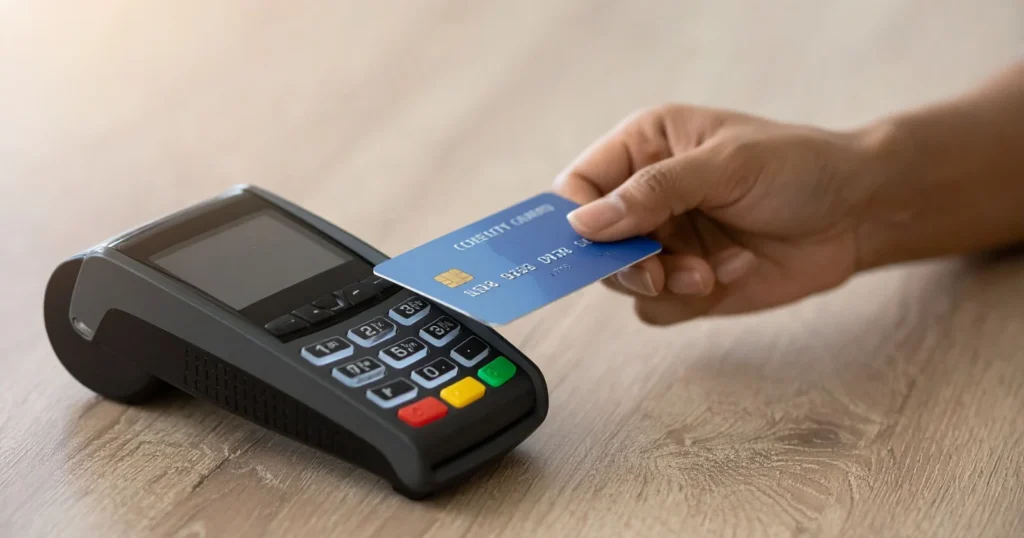
Every time you swipe your credit card, a silent transaction happens behind the scenes. You don’t see it. The cashier doesn’t mention it. But billions of dollars flow from your wallet to credit card companies through a fee you never agreed to pay.
For decades, these charges have been growing larger and more aggressive, buried so deep in the payment system that most people have no idea they’re footing the bill.
This is the story of how merchants pass their costs directly to you—and why nobody’s talking about it.
What Is This Hidden Charge Everyone’s Missing?
The charge is called an interchange fee, and it’s collected every single time a credit card is used. When you buy a coffee, a shirt, or groceries, a percentage of that purchase—typically 1.5% to 3%—goes directly to the credit card issuer. You never see an itemized receipt showing this fee.
The merchant pays it, yes, but they don’t absorb the cost. Instead, they pass it along to customers through higher prices. It’s a hidden tax on every transaction, and it’s been climbing steadily for decades without regulation or public awareness.
The system was designed this way intentionally. Credit card networks created a structure where the cost is invisible to the consumer, making it nearly impossible to track or object to.
How Interchange Fees Drain Your Wallet
Consider a $100 purchase. The interchange fee might be $2.50. The merchant absorbs this cost but compensates by raising prices across the board. That $2.50 comes out of your pocket, whether you’re paying with cash, debit, or credit.
Over a year, if you spend $20,000 on purchases, you’re paying roughly $300 to $600 in hidden interchange fees embedded in prices. For a family of four, that’s easily $1,200 to $2,400 annually—money that goes to banks and credit card networks, not to the businesses you shop at.
The worst part? These fees have increased dramatically. In 2008, the average interchange fee was around 1.5%. Today, for certain card types and transactions, it can exceed 3%, and for premium cards, it climbs even higher.
| Card Type | Average Interchange Fee | Annual Cost (on $20,000 spending) |
|---|---|---|
| Standard Credit Card | 1.95% | $390 |
| Premium Rewards Card | 2.75% | $550 |
| Corporate Card | 2.50% | $500 |
| International Card | 3.10% | $620 |
Why Banks Love This System and Won’t Change It
Credit card networks and banks earn tens of billions of dollars annually from interchange fees. Visa and Mastercard, the two dominant players, collectively process trillions of dollars in transactions every year. Even a 1% fee on that volume generates astronomical profits.
Banks have no incentive to lower these fees voluntarily. The system is perfectly designed: consumers don’t know they’re paying, merchants can’t opt out without losing sales, and regulators have largely stayed out of the way. It’s a win for financial institutions and a loss for everyone else.
When small businesses complain about interchange fees, banks simply remind them that accepting cards is mandatory in a modern economy. Refuse credit cards? Lose customers. Pay the fee? Lose profit margins. There’s no third option.
“Interchange fees have become the largest tax that nobody knows they’re paying. Consumers subsidize credit card networks to the tune of $100 billion per year in the United States alone. It’s a transfer of wealth from everyone to financial institutions, and it’s completely opaque.”
— Dr. Michael Chen, Financial Systems Analyst
The Decades-Long Price Increase Nobody Noticed
In the 1990s, interchange fees were relatively modest, averaging less than 1.5% on most transactions. By the early 2000s, they began climbing. The financial crisis of 2008 should have reduced them, but instead, they surged as banks sought new revenue streams.
Between 2008 and 2023, interchange fees increased by nearly 80% in some categories. This rise coincided with the proliferation of premium reward cards, which justify higher fees by offering cash back, airline miles, and other perks—perks that are partially funded by consumers through hidden price increases.
The most egregious increases happened after 2015, when card networks began introducing new categories and rates. Premium categories, business cards, and international transactions now carry fees that would have been unthinkable a decade ago.
| Year | Average Interchange Rate | Estimated Consumer Cost (annual) |
|---|---|---|
| 1995 | 0.90% | $18 billion |
| 2005 | 1.45% | $42 billion |
| 2015 | 1.85% | $68 billion |
| 2023 | 2.15% | $98 billion |
The growth has been relentless, and there’s no sign it will stop. As long as merchants keep paying and consumers remain unaware, card networks will continue raising rates.
Small Businesses Are Crushed While Banks Profit
Interchange fees disproportionately hurt small businesses. A large retailer like Walmart can negotiate slightly better rates due to volume, but a mom-and-pop store has no bargaining power. Many small retailers lose 2% to 4% of their revenue to these fees alone.
For businesses operating on thin margins—restaurants, grocery stores, independent shops—interchange fees can mean the difference between profitability and closure. Many small business owners have reported that rising interchange costs forced them to raise prices, cut staff, or eventually shut down.
Meanwhile, the credit card companies report record profits. Visa’s net income in 2022 exceeded $15 billion. Mastercard’s exceeded $9 billion. Neither of these companies manufactures products, manufactures nothing physical—they simply extract fees from the payment system.
“When I opened my restaurant in 2010, interchange fees were manageable. Today, they eat up roughly 3% of every sale. I’ve had to raise menu prices 15% over the last decade to maintain my margins. My customers blame me for inflation. They don’t know they’re paying Visa and Mastercard.”
— Sarah Martinez, Independent Restaurant Owner, Texas
Why Regulation Has Failed to Stop This
Interchange fees have been studied by regulatory bodies for decades, and the consensus is clear: they’re excessive. Yet little has been done in the United States to limit them. Europe, by contrast, capped interchange fees at 0.3% for credit cards and 0.05% for debit cards in 2015, significantly reducing consumer costs.
The difference between U.S. and European regulations is striking. An average transaction in the EU now costs merchants far less, and these savings translate to lower prices for consumers. Yet American regulators have resisted similar caps, citing competitive concerns and concerns about reducing innovation in the payments industry.
The credit card industry has spent hundreds of millions of dollars lobbying against regulation. They argue that interchange fees fund the “free” benefits consumers enjoy—fraud protection, dispute resolution, rewards programs. What they don’t mention is that consumers are already paying for these services through higher prices.
“The argument that interchange fees fund consumer protection is a red herring. The truth is that consumers already pay for every benefit through embedded price increases. Capping interchange, as Europe did, doesn’t eliminate protections—it just prevents banks from extracting unlimited rents.”
— Professor James Wilson, Economics Department, University of California
What You Can Actually Do About It
The harsh reality is that individual consumers have limited power to fight interchange fees. You can’t opt out of the system, and switching to cash is impractical in a modern economy. However, there are actions that can reduce your exposure.
First, use debit cards when possible. Debit card interchange fees are capped by the Dodd-Frank Act at roughly 0.05% plus a small fixed fee, making them significantly cheaper than credit cards. This won’t benefit you directly (you don’t see the fee either way), but it reduces the overall cost inflation embedded in prices.
Second, support advocacy efforts for interchange regulation. Consumer groups and small business associations continue pushing for caps similar to those in Europe. These efforts are slow, but regulatory change is the only long-term solution to this problem.
Third, be aware of which merchants pass savings to you when they minimize card payments. Some independent businesses that accept cash give small discounts—these are often merchants trying to offset their interchange burden.
“The most effective action individuals can take is to support policy changes at the state and federal level. Massachusetts, Delaware, and California have explored interchange regulation. If this spreads, it could save American consumers $20 billion annually.”
— Director Linda Thompson, Consumer Payment Advocacy Group
The Future: Will Anything Change?
Several factors suggest change might eventually come. Progressive lawmakers have begun focusing on interchange fees as part of broader inflation concerns. There’s growing recognition that hidden fees contribute to rising prices on everything from groceries to healthcare.
Additionally, alternative payment systems continue emerging. Buy-now-pay-later platforms, digital wallets, and cryptocurrency all pose competitive threats to traditional card networks. If these alternatives gain significant market share, card networks may face pressure to reduce fees to remain competitive.
However, change is likely to be slow. Credit card networks have deep pockets, strong lobbies, and a business model that works perfectly—from their perspective. Meaningful regulation probably requires sustained public pressure and political will that hasn’t yet materialized in the United States.
“Interchange reform will come, but not voluntarily. It will require legislative action, similar to what happened in Europe. The question isn’t whether it will happen, but how long consumers will tolerate paying $100 billion annually in hidden fees before demanding change.”
— Dr. Robert Patterson, Payment Systems Expert, Federal Reserve Bank
FAQ
What exactly is an interchange fee?
An interchange fee is a charge paid by merchants to card networks and issuing banks whenever a customer uses a credit or debit card. It’s a percentage of the transaction amount, typically ranging from 1.5% to 3% for credit cards.
Who actually pays the interchange fee?
Technically, the merchant pays the fee to the card network. However, merchants pass this cost to consumers through higher prices on goods and services. So ultimately, consumers pay the fee, though they don’t see it itemized.
Why don’t I see this charge on my receipt?
Interchange fees are not itemized on customer receipts. They’re part of the merchant’s costs, and merchants recoup them by increasing prices across the board rather than adding a separate line item.
How much does the average American pay in interchange fees annually?
The average American pays between $300 and $600 per year in hidden interchange fees embedded in prices, depending on spending habits. Families can easily pay $1,200 to $2,400 annually.
Are debit card interchange fees lower than credit card fees?
Yes, significantly. The Dodd-Frank Act capped debit card interchange fees at approximately 0.05% plus a small fixed fee, compared to 1.5% to 3% for credit cards. Using debit cards reduces the overall cost merchants face, though you won’t see the savings directly.
Why do premium reward cards have higher interchange fees?
Premium cards offer rewards like cash back and airline miles. Card networks justify higher interchange fees by claiming they fund these benefits. However, consumers ultimately pay for the rewards through higher prices embedded in all goods and services.
Has the government tried to regulate interchange fees?
Yes, but with limited success in the United States. Europe successfully capped interchange fees at 0.3% for credit cards and 0.05% for debit cards in 2015. U.S. regulators have been less aggressive due to lobbying pressure from credit card networks.
What happened to interchange fees during the 2008 financial crisis?
Surprisingly, interchange fees increased after 2008 rather than declining. Banks sought new revenue streams as traditional lending profits declined, and they raised interchange rates across the board. This trend has continued for the past 15 years.
How much has interchange fees increased since 1995?
The average interchange fee has more than doubled from approximately 0.9% in 1995 to over 2.1% in 2023. Some categories, particularly premium and international cards, have seen even steeper increases.
Can merchants refuse to accept credit cards?
Technically, merchants can refuse credit cards, but doing so is economically devastating. Most consumers expect to pay with cards, so merchants who don’t accept them lose significant business. It’s a choice between paying interchange fees or losing customers.
Which credit card networks charge the highest interchange fees?
Visa and Mastercard dominate the market and charge similar rates, typically ranging from 1.5% to 3%. American Express and Discover generally charge higher rates (3% to 4%) but have smaller market shares.
What’s the difference between U.S. and European interchange fees?
Europe capped interchange fees at 0.3% for credit cards and 0.05% for debit cards in 2015. The United States has no federal cap, allowing rates to range up to 3% or higher. This difference results in significantly lower prices for European consumers.