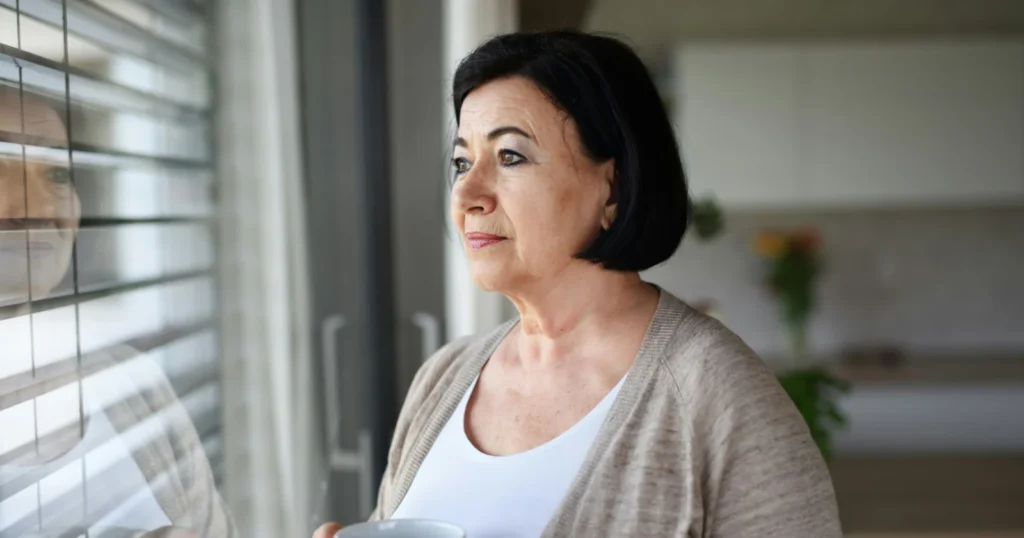
Your mother won’t call you about her aching back. Your father won’t mention he needs a ride to the doctor. They smile and say everything is fine—always fine—even when it clearly isn’t.
But this isn’t independence. This is survival mode, learned so long ago they’ve forgotten it was ever a choice.
Psychologists now understand that older parents who rarely ask their children for help aren’t displaying strength—they’re displaying the echo of a childhood lesson that needing something out loud was the fastest way to become a burden.
The Root of Silent Suffering: Where It All Began
The pattern doesn’t start in old age. It begins in childhood, often in families where resources were stretched thin or emotional capacity was limited. A child who learned early that expressing a need meant creating conflict, worry, or resentment develops a survival strategy: don’t ask.
These children became adults who pride themselves on solving everything alone. They fixed their own problems, handled their own disappointments, and internalized a dangerous belief: asking for help is weakness, and weakness makes you expendable.
By the time they reach their sixties, seventies, and beyond, this pattern is so deeply wired into their nervous system that independence feels like the only moral option. To ask for something would feel like they’re breaking a rule written decades ago.
“What we call ‘independence’ in aging parents is often hypervigilance dressed up as virtue,” says Dr. Margaret Chen, a clinical psychologist specializing in family dynamics and aging. “They learned that their needs were inconvenient, so they learned to disappear them.”
The Cost of Never Asking: What Silence Hides
When older parents refuse to voice their needs, the consequences ripple outward in ways both obvious and subtle. A parent who won’t ask for help with groceries may skip meals. A parent who won’t mention loneliness may develop depression. A parent who won’t admit they’re struggling with mobility may have a fall no one sees coming.
The irony is sharp: in trying to avoid being a burden, they often become one anyway. But now their children are scrambling in crisis mode rather than having the chance to help preventatively, with planning and care.
Research shows that older adults who struggle to ask for support experience higher rates of depression, isolation, and health complications. Their reluctance to communicate needs doesn’t keep them independent—it pushes them further into vulnerability.
| Consequence of Not Asking for Help | Impact on Health | Impact on Family Relationships |
|---|---|---|
| Skipping meals or poor nutrition | Malnutrition, weakened immunity, cognitive decline | Family discovers problem during crisis |
| Avoiding medical appointments | Undiagnosed conditions, delayed treatment | Children feel guilty and resentful simultaneously |
| Not mentioning emotional struggles | Depression, anxiety, increased mortality risk | Emotional distance grows between generations |
| Refusing transportation help | Isolation, reduced activity, social withdrawal | Children worry constantly about safety |
| Not disclosing financial hardship | Stress-related illness, inability to afford care | Family feels blindsided when issues emerge |
The Psychology Behind the Silence: Learned Patterns of Shame
Attachment theory and trauma psychology offer insight into why this pattern is so sticky. Children who grow up in environments where their needs are treated as problems—whether because of parental stress, mental illness, substance abuse, or simple emotional unavailability—develop what psychologists call “preemptive self-reliance.”
They don’t just learn to handle things themselves; they learn that asking is dangerous. It might trigger anger. It might expose the family’s fragility. It might make a struggling parent feel even more inadequate. So the child makes a bargain with themselves: I will need nothing, and that will keep everyone safe.
By adulthood, this bargain feels like character. They’ve spent fifty years building an identity around not needing anyone. To ask now would feel like dismantling their entire sense of self.
“These individuals have confused self-sufficiency with self-worth,” explains Dr. James Rodriguez, a gerontopsychologist at the University of California. “They believe that the moment they ask for help, they become less valuable. This belief was installed before they had any say in the matter.”
Why Adult Children Feel Trapped in This Dynamic
The burden doesn’t fall only on aging parents. Adult children of parents who won’t ask for help live in a constant state of anxious guessing. They must interpret subtle signs, read between lines, and often make assumptions about what their parents need—assumptions that may be entirely wrong.
This creates a relationship dynamic that feels exhausting and confusing. The adult child wants to help but feels rejected. The aging parent wants to maintain control but ends up isolated. Neither person feels truly seen or heard.
Many adult children report feeling guilty for not doing more while simultaneously feeling resentful that their parent won’t communicate directly. It’s an emotional double bind with no clean exit.
In some cases, adult children respond by backing away, sensing their help is unwanted. The aging parent then feels abandoned, confirming their original belief that needing things pushes people away.
“I call this the ‘abandonment spiral,'” says family therapist Simone Hassan. “The parent’s refusal to ask leads the adult child to withdraw, which the parent interprets as confirmation that they’re indeed a burden. Everyone loses.”
The Difference Between True Independence and Learned Fear
Real independence is the ability to ask for help when you need it and feel secure in doing so. It’s the confidence that your value doesn’t decrease because you require assistance. It’s the maturity to recognize your own limits and reach across them without shame.
What older parents who won’t ask for anything are practicing isn’t independence—it’s fear dressed in the language of self-reliance. True independence includes interdependence; it’s the recognition that humans are designed to need each other and that accepting help is not a moral failing.
Consider the difference: A truly independent person recognizes they need a hip replacement and tells their family. An anxiously self-reliant person limps quietly for years because admitting the need feels like a betrayal of their identity.
| Aspect | True Independence | Anxious Self-Reliance |
|---|---|---|
| Asking for help | Seen as practical and mature | Seen as weakness or failure |
| Vulnerability | Accepted as part of being human | Avoided at all costs |
| Relationship with others | Characterized by mutual support | Characterized by distance and control |
| View of aging | Natural process with changing needs | Challenge to be conquered alone |
| Life quality | Often improved by accepting support | Often deteriorates due to isolation |
How to Break the Cycle: Both Sides Have a Role
Breaking this pattern requires work from both aging parents and their adult children. For parents, the first step is recognizing that the rule they learned—don’t ask, don’t burden—was never actually a rule they had to follow. It was a survival strategy that may have saved them as a child but is now harming them.
This recognition is painful. It means acknowledging that the independence they’ve built their identity around is partly a trauma response. But it’s also liberating. Once you see the pattern, you can choose differently.
Adult children, meanwhile, need to shift how they communicate. Rather than waiting to be asked, they can express that helping is something they want to do, that it’s a choice, not an obligation. They can model healthy interdependence by asking their parents for help too, even in small ways.
Creating a family culture where asking is safe and normal requires consistent messaging and patience. It means not punishing a parent for finally expressing a need, even if they express it poorly or after a long silence.
“The best gift an adult child can give their aging parent isn’t money or time—it’s permission,” says Dr. Elena Vasquez, a counselor who specializes in intergenerational relationships. “Permission to be human, to be limited, to be dependent. That permission can actually restore dignity rather than diminish it.”
Reframing Interdependence as Strength
Society often celebrates the stoic aging parent who “doesn’t want to be a burden” as an ideal. We praise their independence and seem to respect them for their refusal to inconvenience their children. But this narrative is damaging, and it needs to shift.
Interdependence—the mutual reliance between people who care about each other—is not weakness. It’s the foundation of human connection. A parent who can tell their child “I need help” and a child who can hear that request without resentment or guilt are both displaying mature strength.
Reframing this for aging parents means helping them understand that asking for help doesn’t diminish them; it allows their children to express love in concrete ways. It deepens relationships rather than threatening them. It models for grandchildren that being human means sometimes needing others.
This shift requires cultural change, not just individual therapy. We need to stop romanticizing the aging parent who suffers in silence and start celebrating the one who communicates their needs clearly and accepts support gracefully.
Moving Forward: Creating Safety for Honest Conversations
If you recognize yourself or your parent in this article, the pathway forward begins with conversation—difficult, honest conversation. It may mean addressing the original wound: the childhood environment where asking felt dangerous.
Professional help can facilitate this. A family therapist or counselor trained in attachment issues can help both parents and adult children understand the pattern and develop new ways of relating. This isn’t about blame; it’s about breaking a cycle.
Small steps matter. A parent who says “I’m struggling with stairs” instead of waiting for a fall has taken a courageous step. An adult child who responds with “Let’s figure this out together” instead of criticism has created safety.
Over time, these small moments compound. Trust rebuilds. The aging parent begins to believe that they won’t be abandoned for their needs. The adult child begins to feel trusted and valued rather than anxious and guessing.
“What I see in my practice is that when aging parents finally allow themselves to ask for help, they often report feeling more connected to their children, not less,” shares Dr. Anthony Lee, a geriatric care manager. “The relief of ending the performance of invulnerability is profound.”
FAQ
Why do aging parents refuse help even when they clearly need it?
Aging parents often refuse help because they learned early in life that expressing needs was unsafe or made them a burden. This becomes a deeply ingrained pattern they mistake for strength or independence. The fear of being seen as vulnerable overrides the practical reality that they need support.
Is it disrespectful to push an aging parent to ask for help?
There’s a difference between respect and enabling harmful patterns. Gently expressing that you want to help and that it’s safe to ask is respectful and loving. It’s about creating permission, not forcing compliance. Respecting their autonomy while also setting boundaries around your own availability is appropriate.
How can I help my aging parent without them feeling criticized?
Frame help as something you want to do, not something they need. Say “I’d love to help with groceries” rather than “You can’t manage groceries.” Offer specific support rather than vague openness. Show that helping works both ways by asking for their help with things too, even small tasks.
What if my aging parent becomes angry when I try to discuss their needs?
Anger is often a defense mechanism covering shame or fear. Stay calm, don’t take it personally, and give them space. Return to the conversation later when emotions have settled. Consider involving a neutral third party like a therapist or trusted family member. Consistency and patience are essential.
Can this pattern change, or is it too late?
It’s never too late to change. While patterns are deeply ingrained, awareness combined with effort can shift them. It may take time, and professional support can help. Many aging parents respond well to consistent, loving messaging that it’s safe to ask for help.
How do I know if I’m enabling an unhealthy pattern in my aging parent?
You’re enabling if you’re constantly guessing their needs, feeling anxious or resentful, or your parent is suffering preventable consequences because they won’t communicate. Setting a boundary—”I can’t help unless you tell me what you need”—can actually encourage healthier communication.
What role does pride play in older parents refusing help?
Pride is a factor, but it’s usually built on fear. Pride alone doesn’t prevent someone from asking for a life-saving medication. The deeper issue is that asking threatens their identity and their core belief about their worth. Addressing the fear is more effective than arguing about pride.
How can I talk to my sibling about our parent’s refusal to ask for help?
Approach it with compassion for your parent’s struggle, not judgment. Discuss what you’ve each observed and how it’s affecting you emotionally. Agree on consistent messaging and approach. Avoid criticizing your parent; instead, focus on creating a united front of support and safety.
Is there a difference between healthy boundaries and the refusal to ask for help?
Yes. Healthy boundaries involve clear communication about what you can and cannot do. Refusal to ask is about silence and invisibility. A parent with healthy boundaries would say “I’ll handle my medical appointments but would appreciate help with transportation.” A parent in this pattern would handle both alone despite needing help.
What can I do if my aging parent’s refusal to ask has led to a health crisis?
After the immediate crisis is handled, have a gentle conversation about what happened. Avoid blame. Instead, focus on how communication could have prevented the crisis. Help your parent see that allowing family to support them before crises happen is actually safer and more responsible.
How do I balance respecting my parent’s autonomy with my concern for their safety?
You can respect autonomy while also being honest about safety concerns. “I respect your independence and I’m also concerned about your safety. Can we work together to find solutions?” honors both values. Sometimes this means professional involvement or setting conditions for your continued support.
What’s the connection between this pattern and mental health issues like depression in aging parents?
Refusing to ask for help often leads to isolation, which is a major risk factor for depression in older adults. Additionally, the constant effort of hiding needs and struggling alone is emotionally exhausting. Getting support—both practical and emotional—improves mental health outcomes significantly.