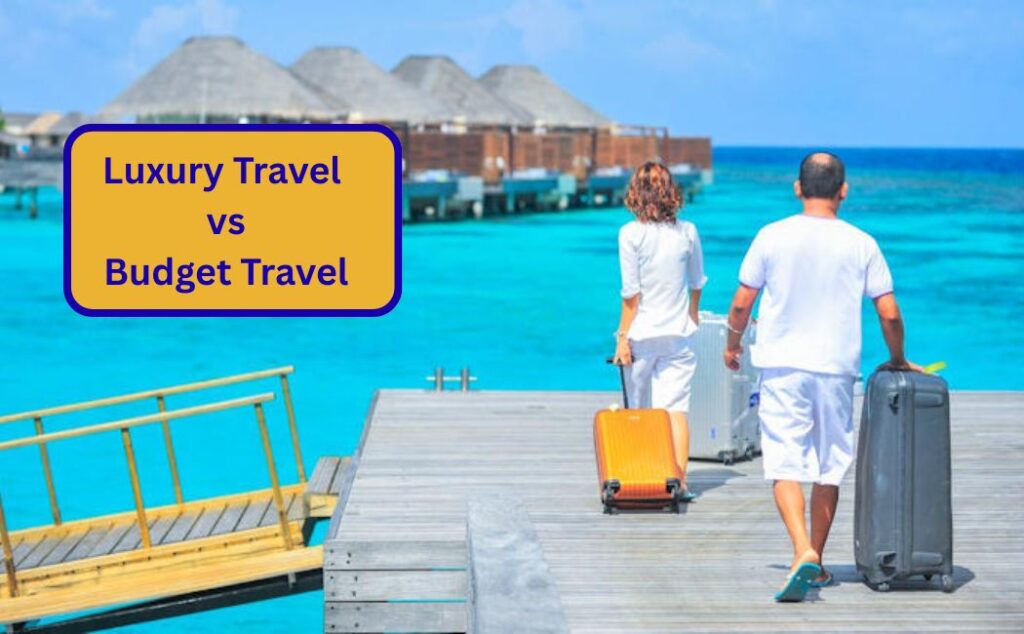
Here’s a confession from someone who has done both ends of the spectrum: I have slept in a hostel dorm room with five strangers while a snorer three feet away competed aggressively with the sound of traffic outside, and I have ordered room service at 11 PM at a Ritz-Carlton while watching the marina lights on the bay.
Both trips were good. Both trips were exactly right for what they were. And that, really, is the entire thesis of this guide.
The internet’s luxury vs. budget travel debate tends to sort people into camps — the backpackers who believe that comfort-seeking travelers are missing the point, and the luxury travelers who believe that anyone who voluntarily shares a bathroom with strangers is engaged in an act of willful self-denial. Both camps are wrong, because the question was never “which style is better.” It’s always been: which style is right for this trip, this moment, this version of you?
This guide gives you the research, the honest comparisons, the facts, the numbers actually shown in 2025 and 2026, and — most importantly — the framework for making that decision for yourself without guilt in either direction.
The State of Travel in 2025–2026: What the Data Actually Shows
Before we get philosophical, the numbers tell a genuinely interesting story about where travel is heading and why this debate matters more than ever.
The travel landscape in 2025 is bifurcating in a way that economists and travel industry analysts are calling unprecedented. According to a Resonance Consultancy report on the 2026 Future of Luxury Travel, the top 10% of American households now take an average of 4.3 leisure trips per year, while the top 1% take 6, more than double the 2.8-trip average for U.S. travelers overall. Meanwhile, a LendingTree survey found that more than half of U.S. consumers are reducing the number of trips they take, caught between the desire to travel and the reality of economic pressure.
Luxury hotels posted a 3% rise in average daily rate and revenue per available room through 2025, while economy hotels posted a 0.8% decline in ADR and a 1.9% drop in RevPAR. In short, the high end of the market is thriving, the low-to-mid end is under real pressure, and everyone is making harder choices about where their travel dollars go.
Budget-conscious travelers are cutting back, while luxury travelers are still spending more, often seeking meaningful experiences rather than longer stays or additional destinations. This isn’t just a spending story. It’s a values story — about what travel is for, and what each style of travel actually delivers.
What These Two Styles Actually Mean (Not What You Think)
Let’s define terms properly, because the words “luxury” and “budget” carry a lot of cultural baggage that obscures what we’re actually talking about.
Luxury travel — at its best, and in its current form — is not primarily about expensive rooms or fancy food. For high-net-worth individuals, travel has become an emotional investment that offers a return in the form of unforgettable experiences. They are seeking private transport, premium cabins, and experiences that are free of travel disruptions, reflecting a desire for certainty and comfort over spontaneity. The currency of luxury travel is increasingly not thread count or champagne — it’s friction removal and time. Every luxury element is, at its core, a way of buying back cognitive bandwidth.
In 2024, the average travel spend of American luxury travelers was around $16,000. The top 1% spend an average of $12,400 per trip. These are not casual indulgences — they represent a serious allocation of resources toward a specific kind of experience.
Budget travel — at its best — is not deprivation or poor planning. Budget travel focuses on getting the most value for your money. It’s about smart spending, flexibility, and cultural immersion. Travelers may stay in hostels or modest hotels, use public transportation, and prioritize local, low-cost experiences. Budget travel, done well, is actually one of the most cognitively demanding forms of travel — it requires creativity, adaptability, and genuine engagement with the places you’re visiting in ways that an all-inclusive removes entirely.
Budget travel is significantly cheaper, sometimes costing as little as $20–$50 per day in some destinations. The flexibility this creates — more destinations, longer trips, more spontaneous pivots — is a genuine advantage that money can’t quite replicate.
The Full Comparison: Side by Side
The Cost Reality
| Category | Budget Travel | Luxury Travel |
|---|---|---|
| Accommodation (per night) | $5–$80 (hostel to budget hotel) | $300–$2,000+ (upscale to ultra-luxury) |
| Flights | Economy, budget carriers, long layovers | Business/first class, direct routes preferred |
| Meals | $5–$25/day (street food, local restaurants) | $100–$500+/day (fine dining, room service) |
| Activities | Free/low-cost ($0–$50) | Curated, private, guided ($200–$2,000+) |
| Transport | Buses, trains, shared transport | Private transfers, taxis, chauffeured cars |
| Average daily spend | $30–$100 (budget destinations) | $500–$3,000+ |
| Typical trip cost (1 week) | $500–$2,000 | $5,000–$30,000+ |
Per-trip spending among the top 10% of travelers has increased sharply: they now spend an average of $7,900 per trip, up from $5,100 in 2022, while the top 1% spend $12,400, up from $8,400. For context, the average U.S. traveler spends $3,700 per trip.
The Experience Quality: Where Each Style Wins
| Experience Factor | Budget Travel | Luxury Travel |
|---|---|---|
| Cultural immersion | ★★★★★ | ★★☆☆☆ |
| Physical comfort | ★★☆☆☆ | ★★★★★ |
| Flexibility & spontaneity | ★★★★★ | ★★☆☆☆ |
| Convenience & logistics | ★★☆☆☆ | ★★★★★ |
| Social connections made | ★★★★★ | ★★☆☆☆ |
| Privacy | ★★☆☆☆ | ★★★★★ |
| Number of destinations possible | ★★★★★ | ★★☆☆☆ |
| Exclusive access & experiences | ★★☆☆☆ | ★★★★★ |
| Personal growth / challenge | ★★★★★ | ★★☆☆☆ |
| Rest & recovery | ★★☆☆☆ | ★★★★★ |
| Environmental footprint | ★★★★☆ | ★★☆☆☆ |
Accommodation: The Real Difference
The accommodation gap is where the luxury vs. budget divide is most viscerally felt — and where each style has genuinely different things to offer.
On the budget side: Hostel beds in central Paris dropped under $39 in December 2025. More than 59,000 low-cost beds are now available across the US, Canada, and Europe. Hostelworld’s 2025 data shows 68% of hostels in Europe offer daily social events — communal kitchen dinners, group walking tours, pub crawls — creating a social infrastructure that solo luxury travelers often genuinely envy. For young travelers and solo adventurers, hostels aren’t a compromise. They’re a destination.
The budget hotel mid-point — brands like Ibis, Motel One, and Generator — has genuinely improved, offering private rooms with consistent standards for $60–$120 per night in most major cities. These aren’t glamorous, but they’re clean, functional, and increasingly located in interesting neighborhoods rather than peripheral districts.
On the luxury side: “When they show up at our properties, we’re getting no rate resistance,” said Host Hotels & Resorts CEO Jim Risoleo, whose portfolio includes Ritz-Carlton and JW Marriott properties. The luxury hotel market is not just performing — it’s expanding. Hotel development is bifurcating, with mid-scale commodity projects struggling to secure financing, while luxury resorts under 150 keys — often paired with branded residences, villas, and private clubs — continue to attract capital.
The ultra-luxury end has moved further from “fancy” toward “bespoke”: small-footprint, high-touch properties like Nekajui (a Ritz-Carlton Reserve in Costa Rica with 107 rooms), Six Senses Rome (96 rooms), and La Valise Mazunte in Mexico (6 suites) represent the current direction of high-end hospitality. These aren’t hotels with pools. They’re environments with curated experiences.
Flights: Economy vs Premium, and What the Data Shows
| Class | Average Price (Transatlantic) | Comfort | Benefits |
|---|---|---|---|
| Economy | $400–$900 | Basic seat, 17–31″ pitch | Gets you there |
| Premium Economy | $1,200–$2,500 | Extra space, better meals | Meaningful upgrade |
| Business Class | $3,000–$8,000 | Lie-flat bed, lounge access | Restorative travel |
| First Class | $8,000–$25,000+ | Suite, maximum privacy | Ultra-luxury |
International premium class travel (business and first class) grew by 11.8% in 2024, outpacing growth in global economy travel of 11.5%. The total number of international premium-class travelers in 2024 was 116.9 million — 6% of total international passengers.
First class accounts for just 0.3% of the world’s 50 leading airlines’ seats, while business class is 9.2%. And the direction is clear: Delta said that in 2026, it expects premium seats revenue to overtake that of the main cabin — a genuinely remarkable milestone that reflects the widening of the travel market’s bifurcation.
For budget travelers, the advent of credit card travel rewards has created an entirely separate economy. The “travel hacking” ecosystem — maximizing points and miles to access business class and luxury hotels at dramatically reduced rates — has become a sophisticated discipline in its own right, and represents the most interesting convergence point between the two travel styles.
The Honest Case for Budget Travel
Let me make the case properly, because the benefits of budget travel go significantly deeper than “it’s cheaper.”
1. Cultural Immersion That Money Genuinely Cannot Buy
Budget travelers often engage more with local cultures, customs, and cuisines, leading to more authentic experiences. This isn’t a consolation prize for not affording better — it’s a genuine advantage. When your accommodation is a family-run guesthouse rather than an international hotel chain, when your transportation is the local bus rather than a private transfer, when your dinner is the unmarked restaurant three blocks from the tourist district rather than the rooftop bar everyone reviews on TripAdvisor — you’re in a different relationship with the place you’re visiting.
Budget travelers tend to stay in local accommodations like guesthouses or hostels, eat at small family-run restaurants, and use public transportation. These decisions help them interact more with the local community. Whether chatting with a street vendor over a bowl of noodles or sitting next to a local on a bus, these simple moments create genuine connections that aren’t typically found in luxury travel.
2. The Freedom to Follow the Day Wherever It Goes
Budget travelers often have the freedom to change plans on a whim. They have the “luxury” of finding new adventures along the way. Travelers who pay big money can’t just suddenly go to another city; otherwise, they’d waste their reservations. The sunk-cost psychology of expensive pre-booked itineraries can trap luxury travelers in a schedule they’ve already committed to financially. Budget travelers can follow a conversation, a rumor, or a spontaneous decision with almost no friction.
3. More Travel, More Often
This is arithmetic, not philosophy. A budget trip to Portugal for ten days might cost $1,500 all-in. A luxury trip to the same destination might cost $8,000. With the same annual travel budget, budget travel means five trips versus one. More countries. More experiences. More of the thing you love.
Around 20% of budget-conscious travelers plan to reduce their spending, with a primary focus on shortening the duration of their trips rather than cancelling them altogether — for many travelers, cost control does not always equate to fewer trips, but rather fewer nights away or opting for more affordable lodging options.
4. Personal Growth That’s Hard to Replicate
Budget travel teaches valuable life skills, hones your financial management abilities, and builds confidence in navigating new places with limited resources. There is a specific competence that develops from figuring out how to get from an airport to a city center in a country where you don’t speak the language, using a bus that doesn’t have your stop written in English. It’s not comfortable. It builds something real.
5. Environmental Footprint
Budget travel’s tendency toward trains, buses, and economy flights (or no flights at all) creates a meaningfully lower carbon footprint than business class travel and luxury resort infrastructure. For environmentally conscious travelers, this matters — and the travel industry is taking note.
The Honest Case for Luxury Travel
Now let me make the equally honest case for the other side — not as a defense of excess, but as a genuine argument for what luxury travel actually delivers.
1. Time Is a Non-Renewable Resource
Luxury travel isn’t about showing off or unnecessary indulgence. At its best, luxury travel is about removing friction, maximizing limited vacation time, and accessing experiences that budget approaches can’t deliver. For people with two weeks of annual leave, young children, demanding careers, or physical limitations, the time cost of budget travel — longer connections, slower transport, more planning, more problem-solving — is not abstract. It’s real.
When you spend 30 hours in transit on a budget routing that saves $400, you haven’t saved $400. You’ve traded 30 hours of your life for $400. Whether that trade makes sense is entirely personal, but it’s not obviously the right choice.
2. Certain Experiences Are Simply Inaccessible at Budget Price Points
Some things genuinely cannot be replicated cheaply. A private dawn game drive in the Okavango Delta. A table at a three-Michelin-star restaurant. A stay at a property where the staff ratio is two-to-one. Luxury travel opens doors to exclusive locations that might not be accessible through budget options: private tours, remote retreats, or historic estates that ensure access to the world’s most stunning destinations.
Customized and private vacations dominate the US luxury travel market with a 32% share, driven by growing demand for highly personalized travel itineraries and exclusive experiences among affluent consumers seeking privacy and flexibility. This isn’t about showing off — it’s about a category of experience that simply has a price floor.
3. Rest Is Valuable — Genuinely, Not Just Comfortably
After a deeply demanding period — a difficult year at work, a health challenge, a major life transition — the thing many travelers need most is actual restoration. Not a challenge. Not character-building through discomfort. Rest. Deep, uninterrupted, hotel-room-with-blackout-curtains rest.
Budget travel often involves a time investment that goes beyond just the physical travel time. Saving money usually means spending more time researching and planning your trip. The cognitive load of budget travel — constant micro-decisions about transport, accommodation, food, and safety — is real, and for travelers who are already cognitively depleted, it can undermine the very recovery that travel was supposed to provide.
4. For Some Destinations, Luxury Is Simply the Right Answer
Some destinations reveal their value only when you invest in the luxury experience. Budget travel in these places often creates more stress than satisfaction. Switzerland is breathtakingly expensive, and attempting to budget travel through it often ruins the experience — cheap hostels still cost significant money, budget food options are limited, and you spend so much mental energy calculating every expense that you can’t relax into the journey.
The Maldives. The Amalfi Coast. The Scottish Highlands. Antarctic expedition cruises. These destinations are worth doing properly or doing differently. Compromising on accommodation in environments where the accommodation is the experience is a false economy.
5. The Luxury Travel Market Is Evolving in Genuinely Interesting Ways
Affluent travelers are spending just as much — or even more — on travel, but with a growing demand for personalized and curated experiences. For these luxury travelers, it’s no longer about frequent vacations but about creating meaningful, well-executed escapes.
Among top 1% travelers, 34% are planning a trip primarily for health and wellness in the next 12 months, up from 23%, and cruising is rebounding sharply, with interest jumping from 37% in 2019 to 53% in 2025. The new luxury isn’t louder or shinier — it’s quieter, more intentional, and increasingly focused on wellness, nature, and meaning over amenities and square footage.
The Smart Middle Ground: The High-Low Strategy
Here’s the concept that has genuinely changed how I think about travel budgeting: the high-low strategy.
This “smart travel” approach focuses on getting the most value without giving up comfort or authenticity. It might mean flying budget airlines but splurging on a boutique hotel for a few nights, or booking a cheap Airbnb so you can afford a special activity like a cooking class or a guided hike. The key is prioritization: spend on what matters to you — whether that’s a scenic train ride, a gourmet meal, or a private guide — while saving on things that don’t.
Aspiring luxury travelers form the largest segment in the US luxury travel market with a 39% share — blending premium and budget choices for elevated experiences. This demographic, including upper-middle-class and emerging affluent consumers, selectively invests in high-end elements like business class flights or premium hotels while staying cost-conscious elsewhere.
The high-low traveler doesn’t split the difference — they make deliberate, specific choices about where the premium is worth paying and where it isn’t. Some examples of the logic:
Pay for: Direct flights (time matters), the one hotel with the view that makes the destination, the guided experience that only works with a guide, the restaurant that’s been on your list for three years
Save on: Transfers (Uber and local transport are almost always fine), breakfasts (local cafés beat hotel breakfast universally), tourist-adjacent shopping (overpriced everywhere), and accommodation in cities where you’ll spend minimal time at the hotel
Generational Differences: Who Travels How in 2025
| Generation | Travel Style Preference | Budget Focus | Key Priority |
|---|---|---|---|
| Gen Z | Budget/flashpacker, social media-driven | Strong cost sensitivity (-31% budgets in 2025) | Authentic experiences, adventure, sharing |
| Millennials | High-low, experience-focused | Highest average spend ($2,602 holiday budget) | Dining, cultural experiences, family |
| Gen X | Comfort-seeking, mid-to-luxury | Value consistency, loyalty programs | Quality, reliability, family travel |
| Baby Boomers | Luxury-leaning, increasing spend | Increasing budgets (+4% YOY) | Outdoor experiences, comfort, and premium |
Among luxury travelers, Gen Z travelers (49%) link luxury to the availability and quality of amenities, millennials (19%) associate it with on-property dining, and boomers (31%) associate it with extraordinary locations.
More than half of Gen Zs say they use short social video platforms for travel research, while millennials are leading generative AI adoption for trip planning, which has grown 1.5x since 2024. The tools of travel research are changing as rapidly as travel preferences themselves.
Which is Better?
Stop asking which style is better. Ask these questions instead:
How much vacation time do you have? If you have 10 days or fewer, the time cost of budget logistics becomes significant. Every hour in transit or spent problem-solving is an hour not spent experiencing the destination. Luxury’s friction-removal becomes more valuable the shorter your trip.
What is the purpose of this trip? Rest and recovery → lean luxury. Adventure and exploration → lean budget or flashpacker. Cultural immersion → lean budget. Celebration or milestone → lean luxury. Personal challenge → lean budget.
Who are you traveling with? Solo → budget maximizes social connections and flexibility. Couple with aligned preferences → either works well. Family with young children → luxury’s logistics handling becomes significantly more valuable. Group of friends with different budgets → high-low strategy is the answer.
What does this destination actually require? Some destinations are budget-friendly by nature (Southeast Asia, Eastern Europe, Central America). Others have high floor costs regardless of how you travel (Scandinavia, the Maldives, Antarctica). Know the destination before deciding your approach.
What’s your current life context? Post-burnout → you probably need real rest more than adventure. High energy, curious, between life chapters → budget travel’s spontaneity will serve you better. Celebrating a specific milestone → do it properly.
The Comparison Table: Budget vs Luxury at a Glance
| Factor | Budget Travel | Luxury Travel | Winner |
|---|---|---|---|
| Cost efficiency | ✅ | ❌ | Budget |
| Number of trips possible | ✅ | ❌ | Budget |
| Comfort & rest | ❌ | ✅ | Luxury |
| Cultural authenticity | ✅ | ❌ | Budget |
| Logistics & convenience | ❌ | ✅ | Luxury |
| Flexibility | ✅ | ❌ | Budget |
| Social connections | ✅ | ❌ | Budget |
| Exclusive access | ❌ | ✅ | Luxury |
| Personal growth | ✅ | ❌ | Budget |
| Time efficiency | ❌ | ✅ | Luxury |
| Environmental impact | ✅ | ❌ | Budget |
| Privacy | ❌ | ✅ | Luxury |
| Memorable stories | ✅ | ✅ | Tie |
The Honest Conclusion: There Is No Winner
The real question isn’t which style is better overall — it’s which style delivers better value for your specific trip goals. Are you seeking adventure and cultural immersion? Are you celebrating a milestone and want pampering? Do you have limited vacation days and need efficiency? Your answer changes everything.
The Ritz-Carlton Sarasota, on a January evening, watching the marina light up over the bay, is the right choice for a certain kind of night. The hostel in Lisbon, where you end up spending three extra days because of the people you met in the common room, is the right choice for a certain kind of life chapter. Neither of these is a compromise. Both are the full version of what travel can be.
What I’ve learned from living on the Gulf Coast — where the entire philosophy of coastal life is about choosing the experience over the performance of having experiences — is that the question is never about the price point. It’s about whether you’re present for what’s actually there. A $30 bowl of noodles eaten on a plastic stool next to a canal in Hội An can be more fully experienced than a $400 tasting menu that you half-watched from behind your phone. A $600 room at a Ritz overlooking the water can give you a morning of complete presence and restoration that a cheap hotel in a noisy street would have denied you entirely.
Travelers are becoming more intentional and selective about their spending. It’s clear that travelers are scrutinizing every aspect of their travel budget more carefully. That intentionality is the answer. Not a budget. Not a brand. The deliberate choice about what kind of experience serves you, in this season, in this destination, with this purpose.
Pack accordingly. Go fully. Come back different.
Quick Reference: At a Glance
Choose budget travel when: You have limited funds but unlimited time — You want to maximize the number of destinations — Cultural immersion is the priority — You’re a solo traveler seeking social connections — You’re in a life chapter that calls for adventure and challenge — The destination is inherently budget-friendly
Choose luxury travel when: You have limited time, but the means to use it well — Rest and recovery are genuinely what you need — The destination’s best experiences require investment — You’re celebrating a milestone — You’re traveling with young children or family members with physical limitations — Logistics and friction elimination matter more than spontaneity
Choose the high-low strategy when: You have a real budget but refuse to compromise on the one or two things that matter most — You’re experienced enough to know which elements actually improve your experience and which don’t — You want to maximize total value rather than winning at either extreme
How do you travel? I’d genuinely love to know — are you a committed budget traveler, a luxury devotee, or somewhere in the middle? Drop your philosophy in the comments. And if you’re figuring out how to afford more travel on the Gulf Coast specifically, the blog has guides to every budget level, from Sarasota’s best waterfront restaurants to the free Sunday drum circle on Siesta Key Beach.