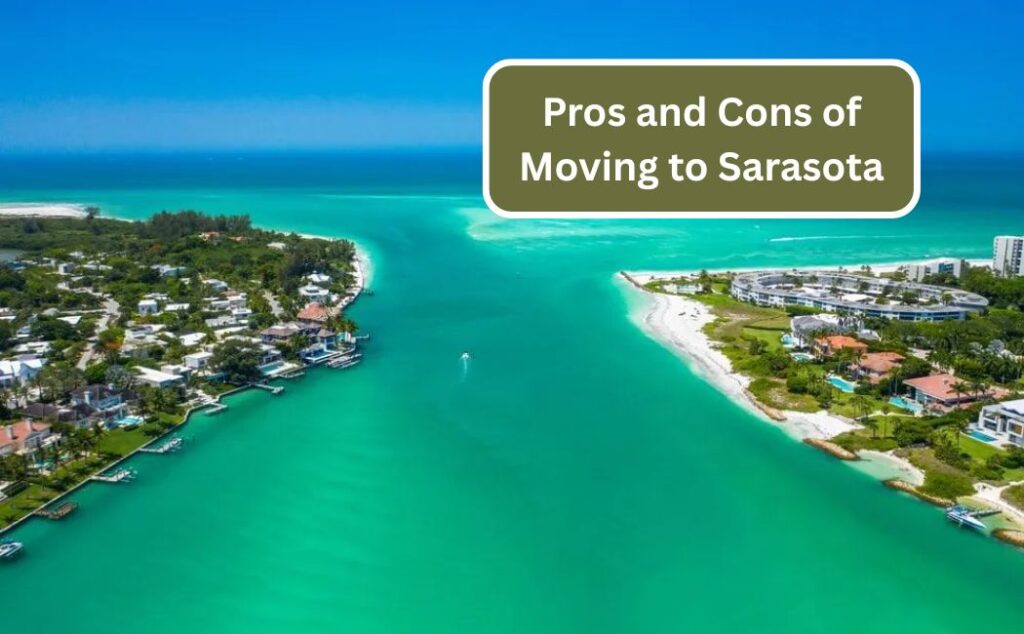
On December 5th, 2023, Ryan and I made the decision to move to Sarasota.
We closed on our house six weeks later. Moved in February. And I have been processing that sequence of events — the speed of it, the audacity of it, the sheer number of things we didn’t know yet — ever since.
I want to be the resource I didn’t have when we were making this decision. Every “moving to Sarasota” guide I found during our research was either written by a real estate agent with an obvious stake in making the city sound perfect, or a general listicle that could have been about any mid-sized Florida city. Nobody was writing the honest version — the one that tells you about the alligators on the sidewalk and the farmers market, about the traffic in January and the post-storm golden hour, about how much it costs and what it costs to stay home.
More than a year in now, I’m ready to write that version.
This is not a press release for Sarasota. This is what I would tell a close friend who texted me and said, “We’re thinking about moving to Sarasota. Should we?”
Who Can Prefer to Live in Sarasota?
Before jumping into the pros and cons of moving to Sarasota, I want to be specific about who Sarasota is actually a good fit for — because this city is not for everyone, and I mean that without judgment.
Sarasota tends to work beautifully for remote workers and digital entrepreneurs who can live anywhere and want somewhere beautiful. Couples without children, or couples with children who are prioritizing school quality and outdoor lifestyle. Retirees and pre-retirees who want culture, community, and beauty without paying Miami or Palm Beach prices.
People relocating from high-cost cities (New York, Chicago, D.C., Atlanta) who want more space and better weather for roughly the same or less money. And people who genuinely love the outdoors — the beach, the kayaking, the trail running, the early morning anything — in a way that makes access to those things a primary quality of life factor.
Sarasota is not fit for people who need a major urban job market in their industry. People who hate heat and would describe themselves as genuinely cold-weather people. People who require significant nightlife or a young-adult-dominant social scene. And, honestly, people who are hoping Florida in general is going to be cheaper than wherever they came from, because Sarasota specifically is not.
With that baseline established, let’s get into it.
What Are The Pros?
1. The Beaches Are Not Hyperbole
I moved here knowing Siesta Key was famous. I had read the rankings. I had seen the photos. And I still was not prepared for what the beach actually feels like.
Siesta Key Beach is ranked the #1 beach in the United States and #28 in the world for 2026. The sand is 99% pure quartz crystal — it stays cool in summer, it glows white in every light, and the texture is something between silk and powder that you have to stand on to believe. The Gulf water reaches 85°F in summer. The color of the Gulf — that specific turquoise-to-teal gradient in shallow water — looks artificially saturated in photographs and is somehow even better in person.
What I didn’t expect was how the beach would change my daily life. I go multiple times a week. Some mornings I’m there before 7 AM, walking in the dark with Basil before the sun has fully arrived. These walks have become the single most reliable anchor to my mental health and daily contentment that I’ve ever had. I’m not being dramatic. I’m a person who spent years living forty-five minutes from the nearest ocean. Having world-class beach access as a daily option has changed something fundamental about how I experience living.
And it’s not just Siesta Key. Longboat Key’s quiet stretches of beach feel almost private even in season. Anna Maria Island, forty-five minutes north, has a completely different energy — slower, more local, with shell-covered beaches and barely a tourist. Brohard Paw Park in Venice, thirty minutes south, is the off-leash dog beach where Basil first ran into the Gulf, and I cried a little watching him. These are all within easy driving distance.
What nobody told me: The beach is not where you go on weekends. The beach becomes your morning, your evening, your Tuesday. That shift in relationship to the water is one of the most significant changes in my quality of life since moving here.
2. The Arts and Culture Scene Is Genuinely Extraordinary
Before moving here, I knew Sarasota had art. I did not know Sarasota had this much art, at this level, in a city of 60,000 people.
The Ringling Museum is Florida’s State Art Museum — a 66-acre bayfront estate with a Baroque art collection that includes significant works by Rubens, van Dyck, and El Greco, plus a Circus Museum, a mansion that once held a crystal chandelier from the original Waldorf Astoria, and bayfront gardens that I’ve walked probably fifty times and still find beautiful. It’s free on Mondays. Free. On Mondays.
The city has 13 performance stages within one mile of downtown. The Sarasota Opera has been running since 1960. Florida Studio Theatre produces full seasons of contemporary work. Asolo Repertory Theatre is one of the most acclaimed regional theater companies in the southeastern United States. Marie Selby Botanical Gardens — which I’ve also written about in the rainy day guide — is the world’s first net-positive energy botanical garden complex, and it’s running serious contemporary art exhibitions alongside its extraordinary orchid collection.
I came from Atlanta, which has its own significant arts infrastructure. Sarasota’s is smaller in scale and in some ways more intimate and accessible because of it. You can get tickets to the opera on short notice. The art museum on a Tuesday morning is yours. The performing arts calendar has something every week of the year. For a city this size, what Sarasota has built culturally is genuinely remarkable.
What nobody told me: You will actually go to these things. Living near them rather than visiting them changes your relationship to culture entirely. We’ve been to more live performances in the past year than in the previous five years combined.
3. The Food Scene Punches Significantly Above Its Weight
Sarasota is not a food city in the way that New York or New Orleans is a food city. But for its size and its Gulf Coast context, the dining scene is excellent — and specifically excellent for a certain kind of eating that I love more than almost any other: fresh local seafood, farmer’s market produce, and the kind of restaurant that takes its ingredients seriously without being pretentious about it.
Owen’s Fish Camp is the restaurant I’ve taken every single out-of-town guest to. The freshest local fish, prepared simply, in a boisterous Old Florida shack with live music in the backyard. Selva Grill’s Peruvian-Japanese fusion ceviche is legitimately one of the better things I’ve eaten anywhere. The Sarasota Farmers Market — every Saturday on Lemon Avenue since 1979 — is the community anchor that my week is organized around.
The breakfast spots are genuinely wonderful — C’est La Vie on Main Street for French pastries that are the real thing, the Breakfast Company for the Santa Fe Skillet Bowl that has embedded itself in my brain, New Pass Grill on City Island for a $7 egg sandwich overlooking the bay channel. And Detwiler’s Farm Market — a local institution on Tamiami Trail — is where I actually grocery shop, because the produce is fresh and local and the prices are honest.
What nobody told me: Sarasota has a proper fine dining scene that most cities twice its size can’t match. And the casual end — the fish tacos, the farmers market, the waterfront tiki bars — is as good as the elevated end. The full range is genuinely there.
4. The Cost of Living Is Better Than People Think (With Caveats)
Florida has no state income tax. This is not a small thing. Coming from Georgia, where I was paying a 5.75% state income tax, the effective pay raise of moving to Florida was immediately noticeable. There’s also no inheritance tax and no estate tax at the state level. For remote workers and anyone who controls their own income, this changes the math significantly.
Property taxes in Sarasota County are moderate by Florida standards, and the homestead exemption — available to primary residents — reduces the taxable value of your home by $50,000 and caps annual increases at 3%. Once you’re in, the tax increase is controlled in a way that it isn’t in most states.
The cost of living overall in Sarasota is roughly 5–10% higher than the national average, but significantly lower than most of the Northern metro areas that people are relocating from. Someone moving from New York, Boston, San Francisco, or Chicago will almost certainly find Sarasota affordable in comparison, even at its current prices. Someone moving from a lower-cost Southern city like Atlanta may experience similar prices rather than dramatic savings.
The caveats — which belong in the cons section but I’ll mention here too — are real. Homeowners’ insurance in Florida has become one of the most significant expenses of property ownership in the state. More on this below.
5. The Community Is Genuinely Welcoming
This surprised me more than almost anything else about the move. I expected a city with a significant seasonal population and a well-established permanent community to feel somewhat closed — the kind of place where friendships are inherited rather than made.
It’s not like that. Sarasota has a strong “if you’re here, you chose to be here” energy that creates an openness with other people who made the same deliberate choice. We’ve met more people, more quickly, than in our years of living in Atlanta. The farmers market is a social event as much as a shopping one. The arts community is genuinely welcoming to newcomers. The outdoor community — the paddlers, the divers, the trail runners — has a culture of pulling new people in rather than maintaining exclusivity.
The PADI certification we did at Florida Underwater Sports connected us to a diving community that we’re now part of. The Sunday drum circle at Siesta Key has its own community of regulars who make space for whoever shows up. The local dog beach culture is relentlessly friendly.
What nobody told me: The permanent Sarasota community is not the retiree monoculture people imagine from the outside. There are young families, creative people, remote workers, artists, and entrepreneurs who chose this city deliberately and are genuinely happy to welcome others who did the same.
6. The Outdoor Life Is Extraordinary and Underappreciated
People know about the beaches. They don’t always know about everything else.
Myakka River State Park is 58 square miles of wild Florida — bald eagles, sandhill cranes, alligators, roseate spoonbills, and the most extraordinary landscape in the county. Thirty-five minutes from downtown. Six dollars to enter. The Legacy Trail is a ten-mile paved multi-use path that I use for cycling and walking. The Lido Key mangrove tunnels are one of the most extraordinary kayaking experiences on the Gulf Coast — a private world of dappled light and wildlife that I’ve taken visitors to specifically so I can watch their faces when they paddle inside. Celery Fields is a 300-acre birding paradise fifteen minutes east of downtown that most new residents don’t discover for months.
For a diving couple, the local dive sites — Turtle Ledge, the Silvertooth artificial reef made from the old Ringling Bridge, the natural reef at Point of Rocks on Siesta Key’s south end — have given us more underwater time in fourteen months than in all our pre-Sarasota life combined. We dove in Hawaii. We’re planning our next trip around a dive destination. That’s what living near the water does to a person.
What Are The Cons?
1. The Insurance Situation Is Serious
This is the most important practical con of living in Florida, and the one that catches people most off guard when they’re doing cost-of-living comparisons.
Florida’s homeowners’ insurance market has been in a genuine crisis. Several major national insurers have left the state entirely. State Farm, Farmers, and others have reduced or eliminated their Florida exposure. Citizens Property Insurance — the state-backed insurer of last resort — is now the largest property insurer in Florida, which is exactly the situation it was designed to avoid.
The result is that homeowners’ insurance in Sarasota and throughout Florida runs dramatically higher than national averages — often $3,000–$6,000+ annually for a single-family home, depending on location, age of the home, and proximity to flood zones. Add flood insurance (which is separate from homeowners and required by most lenders in flood zones), and the annual insurance cost for a Sarasota home can be $5,000–$10,000 or more. This needs to be factored into your true cost of homeownership calculation from day one.
My honest advice: Get insurance quotes before you make an offer on a home, not after. The insurance cost will affect your budget in ways the mortgage payment alone won’t reveal. Ask specifically about the home’s age, roof condition, and flood zone designation — these are the three variables that move the insurance needle most dramatically.
2. The Heat Is Real, and It Is Long
I went into the move knowing Florida summers were hot. I did not fully internalize what “hot for six months” means when you live in it rather than visit it.
Florida’s meteorological summer — the period of genuine heat and high humidity — runs from roughly May through October. Six months. The heat index in July and August regularly exceeds 105°F. The humidity sits between 70–90%. By mid-July, I was structuring my entire day around the weather: outdoor activity before 9 AM or after 6 PM, indoors during the peak heat hours, and post-storm evenings as the best part of the day.
I’ve adjusted. I wrote an entire Florida summer survival guide about how to make it work, and I genuinely love aspects of Gulf Coast summer now — the early morning beach, the post-storm golden hour, the summer produce at the farmers market, the quiet that comes when the tourists go home. But I want to be honest: the adjustment period is real, and if you are a person who is deeply cold-weather-affiliated and finds heat genuinely miserable rather than merely uncomfortable, you will struggle with May through October every year.
The silver lining: Summer is when Sarasota gives itself back to its residents. Hotels drop 25–40% in price. Restaurants take reservations on the same day. Parking at Siesta Key is accessible at 9 AM. The city breathes differently, and if you can lean into the summer rhythm rather than fighting it, it becomes something you look forward to.
3. The Traffic in Season Is a Real Quality of Life Issue
Peak season — roughly December through April — brings a significant influx of seasonal residents and tourists that changes the driving experience in Sarasota meaningfully.
US-41 (Tamiami Trail) through the city can move slowly during winter rush hours. The Stickney Point Road bridge onto Siesta Key backs up on weekend mornings. Parking at Siesta Key Beach requires either very early arrival or the Breeze trolley strategy. Restaurant wait times at popular spots double or triple. A fifteen-minute drive in September can become a forty-five-minute drive in February.
This is not a dealbreaker — it’s a seasonal reality that every Sarasota resident navigates. But if you’re moving from a place with light traffic and have never experienced seasonal traffic fluctuation, the January-to-March driving experience will be an adjustment.
The local adaptation: You learn the timing. You schedule beach days on Tuesday mornings rather than Saturday afternoons. You make restaurant reservations for 5:30 PM rather than 7:30 PM. You take the back roads that the seasonal residents don’t know yet. After a year, it’s mostly invisible.
4. The Nightlife and Young Adult Social Scene Is Limited
I want to be straightforward about this because it matters for some people and not at all for others.
Sarasota skews older. The permanent population median age is around 47, and the seasonal population skews older still. There is no equivalent of Atlanta’s Beltline bar scene, no equivalent of Tampa’s Ybor City, no college town energy, no neighborhood where the streets are full of people under 35 on a Friday night. Siesta Key Village has some nightlife, and downtown Main Street has a few good bars, but the city goes relatively quiet by 10 PM in most areas.
If evening energy, bar scenes, and a socially dominant peer group of people in their mid-20s and early 30s is important to your sense of place, Sarasota will feel thin. Tampa is an hour north and has a much more developed nightlife and young professional scene — many people in their late 20s and early 30s base themselves there and come to Sarasota specifically for beach days and specific restaurants.
The honest take: Ryan and I are in our late 20s/early 30s, and the quieter evening culture has never bothered us. We make dinner the event. We watch the sunset. We’ve found our community in the outdoor, diving, and farmers market world rather than the bar world. But I want to name this clearly for anyone who would feel the absence of nightlife as a genuine quality of life loss.
5. The Wildlife Encounters Require a Mental Adjustment
I mentioned alligators on the sidewalk. I was not speaking metaphorically.
Alligators are a real and regular feature of life in Sarasota and throughout Florida. They appear in retention ponds, in canals, at the edges of golf courses, and occasionally in residential areas near water. Myakka River State Park — one of my favorite places in the county — requires active awareness around waterways because the alligators there are large, wild, and treated with the respect that demands.
The rule is simple and important: keep dogs on leash near any water. Keep children away from water edges in natural areas. Do not feed alligators under any circumstances (it is illegal, and it habituates them to humans dangerously). Give any alligator you encounter a wide berth and leave it alone. If an alligator is in a problematic location — a residential area, a pool, near a playground — call the Florida Fish and Wildlife Conservation Commission rather than attempting to handle it yourself.
I’ve been in Sarasota for over a year, and all the alligator encounters have all been uneventful because I follow these rules. But the mental shift from “alligators are something I see at a zoo” to “alligators are something I might see on a Tuesday afternoon walk” is real and takes a few months to normalize.
Beyond alligators: no-see-ums (tiny biting midges, active around dawn and dusk near water and mangroves), mosquitoes during the wet season, occasional jellyfish at the beach during certain weather conditions, and the occasional appearance of a snake in the yard. None of this is dangerous if you pay attention. All of it requires a recalibration from life in a more northern, more urban environment.
6. Hurricane Season Is Real and Requires Preparation
Hurricane season runs June 1 through November 30, with peak activity in August and September. In the past several years, the Gulf Coast has experienced significant storm impacts that have changed how insurance companies, residents, and local governments think about coastal risk.
Sarasota has geographic factors that offer some protection — the offshore islands provide a degree of buffering, and the bay’s orientation reduces some surge risk compared to more exposed coastlines. But this is not a reason for complacency. Hurricane Ian devastated Fort Myers Beach in 2022. Hurricane Helene and Milton in 2024 brought real impacts to the Sarasota area — storm surge, flooding, and structural damage that have permanently shaped how current and prospective residents think about coastal risk.
What responsible preparation looks like: knowing your evacuation zone (look up your specific address on the Sarasota County official website), having a hurricane kit assembled from June 1 through November 30, understanding your insurance coverage specifically for wind and flood, and having a clear plan for where you’d go with your family and pets if evacuation were ordered.
This is not a reason not to move to Sarasota. It’s a reason to move to Sarasota with eyes open and a plan in place.
7. The Rental and Real Estate Market Is Expensive
The housing market in Sarasota has risen significantly over the past several years, driven by pandemic-era relocation and continued demand from seasonal and permanent migrants. As of 2026, the median home price in Sarasota County runs around $450,000–$525,000, with anything on or near the barrier islands (Siesta Key, Lido Key, Longboat Key) pushing considerably higher.
Rentals follow the same trajectory. A one-bedroom apartment in a desirable location typically runs $1,800–$2,200 per month. A two-bedroom near downtown or close to the beaches runs $2,200–$3,000+. Gulf Gate — the neighborhood I recommend for budget-conscious proximity to Siesta Key in the Sarasota budget guide — is more reasonable, but “reasonable” is relative.
This is not unique to Sarasota — it reflects a Florida-wide and national trend in desirable coastal markets. But it means that the “Florida is affordable” assumption that many people bring to this research needs to be updated with current market data.
The honest framework: If you’re coming from a genuine high-cost city (New York, Boston, San Francisco, Washington D.C.), Sarasota will feel affordable even at current prices. If you’re coming from a lower-cost city (our Atlanta, most of the Midwest, most of the South outside of the largest metros), the prices will be roughly comparable or higher than what you’re leaving.
The Things That Surprised Me That Are Neither Pro Nor Con
The pace is genuinely slower, and your body adjusts to it. In Atlanta, I was always moving toward something — the next meeting, the next event, the next thing. In Sarasota, the pace of the city itself is slower, and within a few months, I found my internal rhythm slowing to match it in a way that I didn’t expect and genuinely needed.
The seasonal resident culture creates an interesting social dynamic. Half the people you meet in January are gone by May and back by December. Friendships have a seasonal rhythm to them that took some getting used to.
The Florida attitude toward rules around nature is genuinely refreshing. Beaches are public. Water access is protected. The state parks are extraordinary and well-maintained. After years in cities where nature access is increasingly managed and monetized, Florida’s tradition of public beach and water access felt like a philosophical gift.
Basil the golden retriever is objectively happier here. This is data, not opinion.
So Should You Move to Sarasota?
Here is what I’d say to the friend who texted me.
Move to Sarasota if you are drawn to a slower, more intentional version of your life. If the beach as a daily presence sounds like something that would fundamentally improve your quality of life rather than just improve your Instagram. If you genuinely love arts and culture and want access to more of it than you currently have. If you’re remote-friendly and want to keep your current income while dramatically improving your environment. If excellent food, a warm community, and extraordinary outdoor access sound like the combination you’ve been looking for.
Be cautious about Sarasota — or adjust your expectations — if you need a traditional job market in a specialized field. If you are someone who derives significant happiness from nightlife, a peer-dominant social scene, or urban energy. If you find heat genuinely miserable rather than merely inconvenient. And if you haven’t done the insurance math, done it honestly, and come out the other side comfortable with what homeownership in coastal Florida actually costs in 2026.
We moved in six weeks. Faster than anyone thought was wise. And more than a year later, I don’t regret a single day of it. What I do wish is that I’d had a clearer picture going in — of the insurance, of the summer heat, of the traffic in February, of the alligators on the path at Myakka. Not because any of it would have changed our decision. But because knowing the full truth of a place before you arrive lets you arrive ready to love it rather than be surprised by it.
Sarasota is extraordinary. It is also real. Both of those things are true simultaneously, and both of them are worth knowing.