Hey beach lovers! I’m Hannah from Belle on the Boardwalk, and before you sprint into those gorgeous blue waves on your next beach vacation, there’s one thing I need you to know first:
Understanding beach flag meanings can literally save your life.
I know that sounds intense for a beach day article, but after years of exploring beaches across Florida and the U.S., I’ve seen too many travelers ignore beach warning flags simply because the water looked calm.
The truth is, the ocean can change in minutes.
One moment it feels peaceful and dreamy… and the next, strong rip currents, dangerous surf, or marine life hazards can create serious danger for swimmers.
That’s exactly why every traveler should understand the official beach flag warning system before stepping into the ocean.
Whether you’re planning a family beach vacation, a romantic coastal escape, a girls’ getaway, or your very first ocean trip, this complete guide will help you understand:
- All major beach flag colors
- What beach warning flags mean,
- Which beach safety flags require extra caution
- And how to stay safe during your beach vacation
Because honestly? A safe beach day is always the best kind of beach day. Before going to the Gulf Coast, check out my guide, Summer Packing List for a Gulf Coast Vacation.
Why Beach Flags Matter More Than Most Travelers Realize
Most people associate the beach with relaxation, sunshine, and vacation memories.
But the ocean is incredibly powerful — and beach warning flags exist for a reason.
Every year, thousands of swimmers get caught in dangerous situations because they ignore or misunderstand the beach flag warning system.
The Real Dangers Behind Beach Hazard Flags
| Risk | What Happens |
|---|---|
| Rip currents | Powerful currents can pull swimmers away from shore within seconds |
| Strong surf | Large crashing waves may knock swimmers underwater |
| Marine life | Jellyfish, stingrays, and sharks can cause injuries |
| Water contamination | Unsafe water can lead to illness or infections |
| Offshore winds | Inflatables may drift dangerously far into the ocean |
And honestly? The scariest part is that dangerous conditions don’t always look dangerous.
Some of the strongest rip currents happen on beautiful sunny days.
That’s why understanding beach safety flags is one of the smartest things you can do before swimming.
Understanding the Beach Flag Warning System
The official beach flag warning system uses colored flags to quickly communicate ocean conditions and swimming hazards to beachgoers.
Each beach flag color represents a different safety level.
Learning these beach flag meanings before entering the water helps travelers recognize:
- dangerous currents
- rough surf
- marine life hazards
- unsafe swimming conditions
- emergency situations
Even experienced swimmers should always pay attention to beach warning flags, because conditions can change throughout the day.
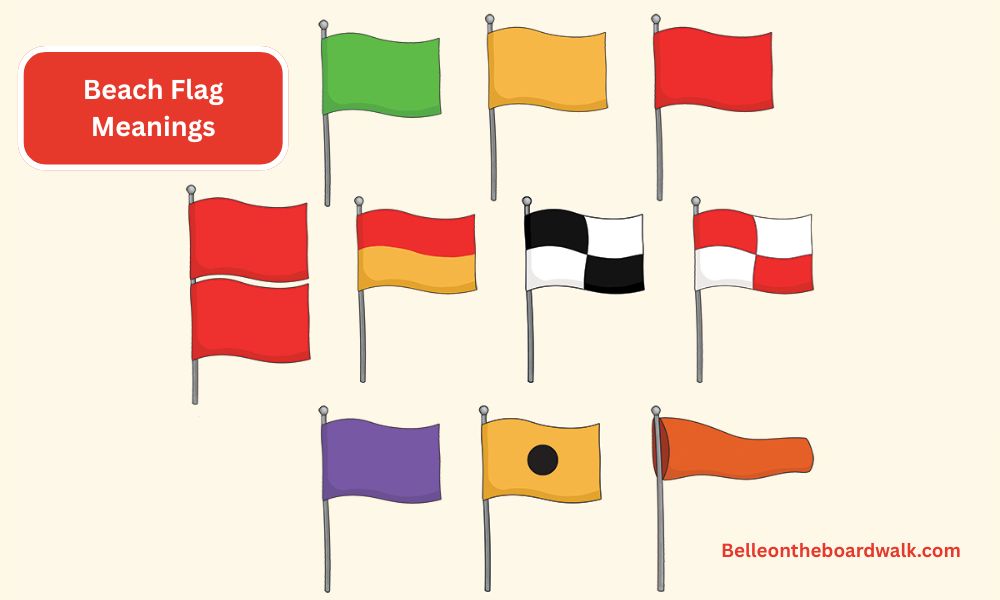
GREEN FLAG: Low Hazard = Calm & Safer Conditions
There’s honestly nothing better than arriving at the beach and seeing a green flag gently waving in the breeze.
A green beach flag usually means calm water, lower surf, and safer swimming conditions.
What the Green Beach Flag Means
- Low hazard conditions
- Calm surf and weaker currents
- Generally safe swimming conditions
- Water quality meets safety standards
A green beach flag is considered the safest condition in the beach flag warning system, especially for families and beginner swimmers.
When You’ll Usually See Green Beach Safety Flags
- Calm weather days
- Early mornings
- Lower surf conditions
- Peaceful off-season beach days
My Beach Tip
Even with green beach safety flags, the ocean still deserves respect.
Green does not mean “zero danger.”
I still recommend:
- staying near lifeguards
- watching children closely
- avoiding swimming alone
- checking conditions throughout the day
Some of my favorite Florida beach mornings happened under green flags — calm turquoise water, soft waves, and that peaceful feeling that makes you never want to leave.
YELLOW FLAG: Medium Hazard = Swim Carefully
Yellow beach warning flags are some of the most misunderstood beach hazard flags because conditions may still appear calm from shore.
But yellow flags mean the ocean is becoming more unpredictable.
What the Yellow Beach Flag Means
- Moderate surf or currents
- Increased rip current risk
- More challenging swimming conditions
- Swim with caution
Why Yellow Beach Flags Matter
A yellow beach flag doesn’t necessarily mean “don’t swim.”
But it does mean:
- Stay close to shore
- Watch children carefully
- avoid inflatables
- remain alert in the water
My Honest Advice
This is the beach flag color that makes me extra cautious.
The water may still look beautiful, but currents underneath can become surprisingly strong.
If you’re not a confident swimmer, yellow beach safety flags are a good reminder to stay shallow and avoid swimming too far out.
RED FLAG: High Hazard = Dangerous Ocean Conditions
Among all beach flag colors, the red beach flag is one of the most serious warnings swimmers can encounter.
The waves are usually stronger.
The currents are more dangerous.
And the ocean becomes far less predictable.
What the Red Beach Flag Means
- Strong currents
- Rough surf
- Dangerous swimming conditions
- High hazard warning
Red beach warning flags often indicate strong rip currents and hazardous wave activity.
My Warning
I know it’s frustrating to skip swimming during vacation.
Especially after traveling hours to finally reach the beach.
But honestly? No beach photo is worth risking your safety.
Red flag days are perfect for:
- beach walks
- collecting shells
- relaxing under an umbrella
- exploring nearby boardwalks
- enjoying local seafood restaurants
Sometimes the smartest beach decision is staying out of the water.
DOUBLE RED FLAG: Water Closed
Double red beach warning flags mean the water is officially closed to the public.
This is the most serious beach flag warning most travelers will ever see.
What Double Red Beach Flags Mean
- Water closed
- Swimming prohibited
- Extreme surf conditions
- Dangerous currents
- Unsafe for everyone
Reminder
Please never ignore double red beach flags.
Every year, tourists enter the water thinking they’ll “just go in for a second.”
But dangerous ocean conditions can become deadly incredibly fast.
If you see double red:
Stay on the sand
Enjoy the beach safely
Wait for conditions to improve
No swim is worth an emergency.
PURPLE FLAG: Dangerous Marine Life Present
Purple beach safety flags warn swimmers about dangerous marine life in the area.
And honestly? They always make families a little nervous.
What the Purple Beach Flag Means
- Jellyfish nearby
- Stingrays present
- Dangerous marine life spotted
- Increased sting or injury risk
My Beach Tip
One of the most painful beach experiences I’ve ever had was accidentally stepping near a stingray in shallow water.
Since then, I have always:
- Shuffle my feet in shallow water
- Wear water shoes
- Watch marine life warnings carefully
Purple beach warning flags don’t necessarily mean you can’t swim — but they do mean you should stay alert.
RED & YELLOW FLAG: Lifeguard Protected Area
This is one of the best beach safety flags you can see.
A red and yellow beach flag means lifeguards are actively supervising the swimming area.
What Red & Yellow Beach Flags Mean
- Lifeguards on duty
- Designated swimming zone
- Closely monitored area
- Safest swimming location on the beach
My Beach Advice
Whenever possible, always swim near lifeguards.
Especially if:
- You’re traveling with kids
- You’re unfamiliar with the beach
- You’re not a strong swimmer
- Surf conditions are changing
This is always where I set up my beach chair first.
BLACK FLAG: Emergency Situation
Black beach flags are rare — but extremely serious.
What Black Beach Flags Mean
- Emergency conditions
- Immediate evacuation required
- Water unsafe
- Potential marine danger or contamination
If you ever see a black flag:
Leave the water immediately.
These beach hazard flags are used during dangerous emergency situations.
ORANGE WINDSOCK: Dangerous Offshore Winds
An orange windsock warns beachgoers about dangerous offshore winds.
What It Means
- Strong winds are blowing away from the shore
- Dangerous for inflatables
- Higher drifting risk
My Tip
Never use floaties or inflatable rafts when offshore winds are strong.
They can drift farther from shore faster than most people realize.
Quick Reference Beach Flag Meanings Chart
| Beach Flag Color | Hazard Level | Meaning | Can You Swim? |
|---|---|---|---|
| 🟢 Green | Low | Calm conditions | ✅ Yes |
| 🟡 Yellow | Medium | Moderate surf/currents | ⚠️ With caution |
| 🔴 Red | High | Dangerous surf/currents | ⚠️ Strong swimmers only |
| 🔴🔴 Double Red | Extreme | Water closed | ❌ No |
| 🟣 Purple | Marine Life | Dangerous sea creatures | ⚠️ At your own risk |
| ⚫ Black | Emergency | Evacuate immediately | ❌ No |
| 🟡🔴 Red & Yellow | Lifeguards Present | Safest swimming area | ✅ Yes |
My Top Beach Safety Tips
Before You Swim:
- Always check beach warning flags first
- Swim near lifeguards whenever possible
- Never swim alone
- Watch children closely
- Respect all beach safety flags
- Avoid swimming during dangerous surf
- Stay updated on changing beach conditions
My Personal Beach Routine
Every time I arrive at the beach, I:
- Check the beach flag colors first
- locate the nearest lifeguards
- Watch wave conditions
- Check for rip current warnings
- Reassess conditions throughout the day
Because honestly? Beach conditions can change fast.
And feeling safe makes the entire beach experience way more relaxing anyway.
Frequently Asked Questions About Beach Flag Meanings
What do beach flags mean?
Beach flags are part of a beach safety warning system used to alert swimmers about ocean hazards, surf conditions, currents, and marine life dangers.
What does a red beach flag mean?
A red beach flag signals high hazard conditions, including dangerous surf and strong currents.
What does a double red beach flag mean?
Double red beach flags mean the water is closed, and swimming is prohibited.
What does a purple beach flag mean?
A purple beach flag warns swimmers about dangerous marine life like jellyfish or stingrays nearby.
Are beach flag meanings the same everywhere?
Most U.S. beaches follow similar beach flag meanings, though some local beach safety systems may vary slightly.
Final Thoughts: Beach Flags Save Lives
Understanding beach flag meanings is one of the easiest ways to stay safe during any beach vacation.
These beach safety flags are designed to protect swimmers from dangerous surf, rip currents, marine life hazards, and changing ocean conditions before anyone enters the water.
Whether you’re planning a relaxing Florida getaway, a family beach trip, or your dream coastal vacation, paying attention to beach warning flags can help keep you and your loved ones safe.
For more beach travel guides, Florida hidden gems, coastal safety tips, and dreamy boardwalk destinations, explore more on Belle on the Boardwalk: