Let me start with the question underneath the question.
When women ask whether they’re safer traveling in luxury than on a budget, what they’re really asking is: does spending more money actually protect me, or does it just feel like it does?
That distinction — between actual safety and the feeling of safety — is the most important thing I can address in this post, because confusing the two leads to either overspending on protection you didn’t need or underestimating risks that exist regardless of your accommodation tier.
I’ve been thinking about this a lot lately — partly because of the volume of questions I get from readers who are considering their first solo trips after reading the Sarasota weekend itinerary or the Florida summer survival guide, and partly because I’ve been doing the research for our own travel this year. The honest answer to the luxury vs. budget safety question is nuanced in ways that most travel guides flatten into “just stay somewhere nice.” But it deserves a real answer. So here it is.
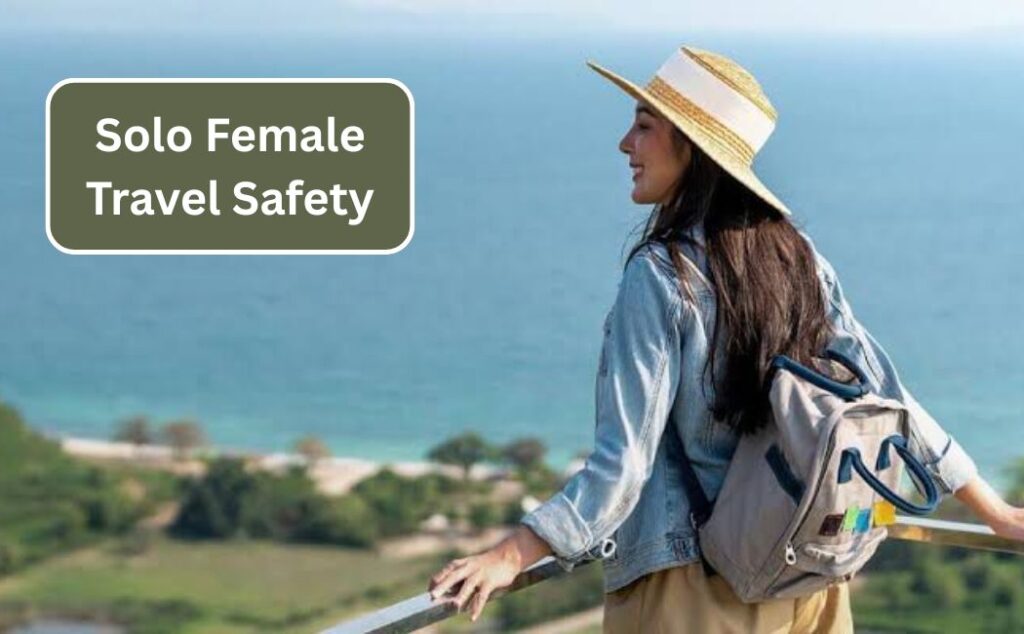
What the Data Actually Says About Solo Female Travel Safety?
Before we can talk about what changes between budget and luxury travel, we need to understand what the actual risks look like — not the perceived risks, which are significantly inflated.
Only 12% of solo female travelers report being physically attacked or threatened while traveling, according to surveys of over 350 women travelers — yet 97% say they don’t feel physically capable of defending themselves. The fear is much bigger than the actual risk.
64% of women experience unwanted attention while traveling solo — catcalling, staring, or inappropriate comments. This is the real daily reality of solo female travel: not violence, but the constant low-grade friction of unwanted attention, street harassment, and the mental load of navigating environments that aren’t designed with women’s safety in mind.
70–84% of women still list safety as a primary concern before solo travel. But the percentage of women who report feeling unsafe drops from 78% to 59% after taking 10 or more solo trips. Experience builds confidence. First-time travelers often feel vulnerable because they’re unsure of what to expect. Seasoned solo travelers understand real risks versus imagined ones.
Searches for solo female travel have increased fivefold since pre-pandemic levels, with a significant surge in 2025. More than three-quarters of all solo travelers are women.
This is the context: solo female travel is more popular than it has ever been, the fear of it is significantly larger than the statistical risk, and the actual daily challenge for most women isn’t violent crime but persistent, low-level harassment that affects enjoyment and comfort more than physical safety.
With that baseline established, here is what actually changes between budget and luxury travel, and where the distinction matters and where it doesn’t.
What Luxury Travel Genuinely Does Better for Safety
1. Accommodation Security and Vetting
This is the area where the gap is most real and most significant.
According to Booking.com’s 2024 travel behaviour report, 41% of solo female travelers have changed accommodations mid-trip due to safety concerns. That is a staggering number — nearly half of solo female travelers have abandoned a place they booked because it didn’t feel safe when they arrived. This is far more common at budget properties than at vetted mid-range and luxury hotels.
A budget hostel in an unfamiliar neighborhood, a guesthouse with a broken lock, a rental apartment where the property manager seems to know which unit is yours and visits without warning — these are real scenarios that solo women navigate more frequently at the lower end of the accommodation spectrum. They’re not universal, but they’re common enough that the 41% statistic isn’t shocking to most women who have traveled alone on a budget.
Luxury hotels and well-reviewed mid-range hotels provide concrete safety advantages: 24/7 staffed reception, key card room access rather than physical keys, security cameras in common areas, documented check-in processes that require ID verification, and the accountability that comes from being a large, branded property with reputational stakes. When something goes wrong at a Marriott or a Ritz-Carlton, there is an institutional process for addressing it. When something goes wrong at an anonymous guesthouse booked through a third-party aggregator, the outcome is more uncertain.
When registering at accommodation, travel safety experts recommend using your first initial and no title — don’t use “Mrs., Ms., or Miss.” — and not telling strangers where you’re staying. This advice applies at every accommodation tier, but the risks it’s guarding against are more present in budget properties where front desk interactions may be less formalized.
The practical takeaway: Accommodation security is the most legitimate safety advantage of higher-budget travel — not because luxury is inherently safe, but because vetted, staffed, accountable properties reduce specific categories of risk in ways that cheap, informal accommodations sometimes don’t.
2. Transportation Reliability
The safety of public transportation varies significantly by place. In many locations, informal taxis or minibuses can be dangerous, particularly for women traveling alone. The U.S. Department of State recommends arranging transport to and from airports before arriving, from a licensed and reputable company, and using app-based transportation companies that offer a record of the ride.
Budget travel often relies on public transit, informal shared vehicles, and the kind of transport decisions made in the moment — hailing a cab rather than booking ahead, taking the cheaper shared minibus rather than a private transfer, arriving at a bus station at midnight because the budget overnight bus was the cheapest option. Each of these introduces friction and uncertainty that a pre-arranged, paid transfer eliminates.
Luxury travel typically means private transfers from the airport, trusted car services booked through the hotel, or, at a minimum the resources to use ride-hailing apps with GPS tracking and driver accountability. App-based transportation companies offer a record of the ride — unlike hailing a ride on the street — and some allow a rider to require drivers to verify a unique PIN upon pick-up, as well as share the real-time ride record to another phone.
The practical takeaway: Nighttime and late-arrival transportation is a genuinely higher-risk category for solo female travelers, and budget travel’s reliance on public or informal transit increases exposure to this risk. The single most impactful transportation safety investment — regardless of overall budget level — is booking a legitimate, vetted airport transfer for arrival, especially late at night.
3. Neighborhood and Location Context
Higher-budget accommodation tends to be in better-lit, more-trafficked, more-central locations — not always, but often. A $300/night hotel in Paris is more likely to be in the 1st, 2nd, or 7th arrondissement than in a peripheral neighborhood with less tourist infrastructure and less consistent street-level activity after dark.
Budget accommodation clusters in areas where real estate costs are lower, which don’t always correlate with higher safety levels. This isn’t a condemnation of budget neighborhoods — many of the most interesting, locally authentic parts of any city are in less expensive areas — but it’s worth being honest that location is a safety variable that partially tracks with cost.
The practical takeaway: Research the neighborhood of any accommodation, regardless of budget tier. The best budget travel guide to any destination will tell you which budget-friendly areas are genuinely safe and interesting versus which are cheap for reasons related to safety. This research is the single most valuable preparation a solo female traveler can do before booking accommodation. The Sarasota budget travel guide on this blog is built around exactly this logic — Gulf Gate is affordable and safe; other cheap options in less familiar neighborhoods are worth researching first.
Where the Budget vs. Luxury Distinction Doesn’t Actually Matter
This is the part most luxury-travel-as-safety-solution arguments miss: there’s a large category of solo female travel risks where your accommodation tier is largely irrelevant.
Destination Safety Matters More Than Accommodation Tier
Europe is generally considered a safe region for female travelers. Countries such as Ireland, Switzerland, and Portugal have low crime rates and a welcoming atmosphere for women traveling alone. Canada, Japan, Singapore, and New Zealand also rank highly in terms of safety, reliable public transport, and access to healthcare services, with lower reports of harassment and violence against women.
The highest risk levels globally are concentrated in parts of Sub-Saharan Africa and the Middle East and North Africa, where ongoing geopolitical tensions and restrictive policies significantly complicate travel for women.
A solo woman staying at a budget hostel in Lisbon or Tokyo is in a fundamentally different safety situation than a solo woman staying at a five-star hotel in certain parts of North Africa or the Middle East. The luxury tier doesn’t override destination-level risk. Travel to parts of North Africa and the Middle East can be challenging due to local laws and cultural and religious practices that restrict what women wear and how they can behave in public.
The practical implication: your first safety decision is destination, not budget. A budget trip to Portugal is safer than a luxury trip to several other countries on the Riskline high-concern map. Choose your destination thoughtfully — then optimize your accommodation and transport within it.
About 54% of solo female travelers endorse Europe as the perfect first solo trip destination for women, and with an index score of 7.45, Spain is considered the safest country for female solo travelers.
Street Harassment Happens at Every Price Point
Spending more does not protect you from harassment in public spaces. A woman walking down the street in Rome in designer shoes experiences the same catcalling as a woman walking the same street in sneakers. Street harassment is not related to perceived wealth — in many contexts, visible affluence can attract more attention, not less.
64% of women experience unwanted attention while traveling solo. This number does not decrease based on accommodation tier. It decreases based on destination choice, neighborhood, time of day, cultural context, and the experience level of the traveler.
The practical takeaway: The tools for managing street harassment — cultural awareness, confident body language, firm verbal refusals when needed, strategic use of public spaces, timing of activities — are skills, not purchases. They cannot be bought at any price point. This is where experience, preparation, and the kind of practical knowledge that comes from good research and trusted community recommendations matter far more than budget level.
Digital Safety Is Equal-Opportunity
Scams, digital privacy risks, and the social engineering that targets solo travelers regardless of where they’re staying are not a budget-travel problem. They’re a solo-travel problem. Phishing attempts, rental scams, fake taxi drivers who present themselves as legitimate — these target travelers across budget tiers.
The top safety concerns for solo travelers are mugging (15%), road accidents (14%), and scams (13%). Scams in particular tend to target tourists visibly spending money, which can make affluent travelers more visible targets for certain types of fraud.
What Actually Protects You?
After the research and after honest reflection on what experienced solo female travelers consistently report, here are the variables that actually determine safety — in rough order of impact.
1. Destination choice. The most important decision you make. A budget trip to Japan, Iceland, or Portugal is safer than a luxury trip to dozens of other destinations. Research the Riskline Female Traveler Safety Map and the Solo Female Travelers Club Safety Index before choosing where to go, not just after.
2. Research quality. Today’s solo female travelers are better informed, better prepared, and more connected than ever, with access to digital communities, women-led travel platforms, safety apps, and government advisories. Women who research specifically for solo female travel experiences — using Reddit’s r/solotravel, Facebook groups like Girls LOVE Travel (700,000+ members), and destination-specific solo female travel blogs — are consistently better prepared than those who rely on general travel guides.
3. Accommodation vetting regardless of tier. Read the reviews specifically looking for mentions of “solo female,” “felt safe,” and “secure neighborhood.” A well-reviewed $40/night hostel in a safe neighborhood that solo women specifically recommend is safer than a poorly-reviewed $200/night hotel in an unfamiliar area. The tier matters less than the vetting.
4. Transportation decisions, especially at night. This is where spending slightly more — on a legitimate airport transfer, on an Uber rather than an unofficial cab, on a daytime bus rather than a midnight arrival — has the highest return on investment. Recommended measures include scheduling early flights and avoiding late-night solo travel, selecting accommodations in safe, well-located areas with vetted transportation.
5. Communication protocol. Ensure a trusted friend or family member knows your plans and how to contact you. The U.S. Department of State’s Smart Traveler Enrollment Program (STEP) is a free service that enrolls you with your nearest U.S. embassy, enabling safety alerts and making it easier to contact you in an emergency. For international travel specifically, this takes ten minutes and is worth it at every budget level.
6. Confidence and cultural preparation. Solo female travel confidence grows with each trip — safety worries drop from 78% on first trips to 59% after 10 solo adventures. The experience itself builds the pattern recognition to distinguish real risk from perceived risk. Cultural preparation — understanding local customs, dress expectations, areas to avoid, and the specific dynamics of harassment in your destination — is the most underinvested area of travel preparation and the one that pays off most reliably.
The Honest Budget Tier: Where to Spend and Where to Save
Given everything above, here’s the practical framework for a solo female traveler optimizing both budget and safety:
Always spend on:
- A legitimate airport transfer on arrival, especially if landing after dark. The marginal cost of a vetted car over an informal taxi is usually $15–$40 and is worth every cent.
- Accommodation in a safe, well-reviewed neighborhood, even if it means spending slightly more. The $20/night savings on a cheaper place in a less-vetted area is rarely worth it.
- Travel insurance that includes emergency medical evacuation and 24/7 assistance. More experienced solo female travelers buy more travel and health insurance and carry more safety tools. This is not a coincidence — they’ve learned what the actual risk categories are.
- A local SIM card or international data plan from day one. Being connected and navigable is a safety feature, not a luxury.
Save thoughtfully on:
- Accommodation tier mid-trip, once you’ve established neighborhood comfort and have local knowledge. A $60/night mid-range hotel in a safe area you’ve now walked is a better safety choice than a $200/night hotel in a neighborhood you haven’t researched.
- Activities and tours. Safety in activities comes from choosing reputable operators, not from spending more per hour.
- Food and transport within a known destination. Once you understand how the transit system works and what the safe walk routes are, budget options are genuinely fine.
Never save on:
- Research time. The hours spent on destination research before you leave home are the highest-return safety investment you can make, and they cost nothing but time.
- Your instincts. If a situation feels wrong, leave. If an accommodation feels off when you arrive, the sunk cost of the booking is not worth staying. 41% of solo female travelers have changed accommodations mid-trip due to safety concerns. This is not overreacting. This is good judgment.
The Gulf Coast Parallel: Safety Principles That Apply Everywhere
Everything above applies to traveling in Sarasota, the Gulf Coast, and Florida just as much as it applies to international travel. The same principles that make a solo woman’s trip to Portugal safe — good research, vetted accommodation, planned transportation, neighborhood awareness, community recommendations — are what make a solo weekend in Sarasota or a day trip to Anna Maria Island feel genuinely comfortable rather than vigilance-demanding.
The Gulf Coast is, by objective measures, a very safe travel destination for solo women. The beaches are public, well-populated, and well-lit into the evening. The walkable areas of downtown Sarasota, Siesta Key Village, and St. Armands Circle have the kind of constant foot traffic and open-business presence that creates natural safety in numbers. The Sunday drum circle at Siesta Key is one of the most genuinely welcoming, community-spirited events I’ve encountered anywhere — solo women attend weekly, and the atmosphere is warm without being predatory.
But even here, the budget considerations matter. The Sarasota budget travel guide I wrote identifies Gulf Gate as the most practical budget neighborhood for proximity to Siesta Key — and part of what makes it practical is that it’s a residential neighborhood with a genuine community feel rather than an anonymous strip of highway motels. The safety consideration and the budget consideration pointed to the same recommendation.
That’s usually how it works if you research well.
A Note on the Mental Health Dimension
I want to close with something that rarely appears in safety guides but that I think matters enormously.
Many solo female travelers describe their trips as “transformative,” especially after life transitions such as divorce, job burnout, or empty-nesting. Many noted reduced anxiety, better sleep, and a feeling of emotional reset after traveling alone. The mental health benefits of being near water that I’ve written about on this blog extend to solo travel near water specifically — there’s something about the combination of solitude, natural environment, and the particular freedom of being accountable only to yourself that produces a quality of rest and clarity that group travel rarely matches.
The fear of solo female travel, while understandable and rooted in real experiences, can also be its own kind of cost. 69% of women who have not traveled alone cited safety concerns as a major barrier. That’s a lot of trips not taken. A lot of freedom is not claimed.
The data suggests the actual risk is significantly lower than the perceived risk. The research, preparation, and selective spending described in this guide genuinely reduce the real risks that do exist. And the experience of taking even one well-planned solo trip — and returning with the knowledge that you navigated it well — tends to make the next one feel considerably less daunting.
Solo female travel is increasingly framed as an act of self-care. The quiet moments — reading by the beach, journaling in a café, watching sunsets in silence — help women reconnect with themselves in a way that’s genuinely difficult to replicate in other contexts.
The Gulf Coast is a particularly good destination for a first solo trip for exactly this reason. The pace is slow, the environment is beautiful, the locals are friendly, and the beaches are among the finest in the world. You don’t have to go far to go somewhere wonderful. And you don’t have to spend a lot to be genuinely safe.
You just have to go.
Solo Female Travel Safety by Budget
| Safety Factor | Budget Travel | Luxury Travel | What Actually Matters |
|---|---|---|---|
| Accommodation security | Variable (vet carefully) | More consistently reliable | Reviews from solo women, not just star rating |
| Neighborhood | Research required | Usually better-located | Research quality beats budget tier |
| Airport transfer safety | Higher risk if using informal transport | Usually pre-arranged | Book legitimate transfer regardless of budget |
| Street harassment | Equal across all tiers | Equal across all tiers | Destination choice + cultural prep |
| Digital/scam risk | Equal across all tiers | Equal across all tiers | Awareness, not spending |
| Transportation safety | Higher reliance on public/informal | Private, vetted options | Budget for airport + late-night trips |
| Community/social safety | Often better (hostel culture) | More private, less social | Depends on traveler personality |
| Emergency resources | Research required | Hotel concierge assistance | Travel insurance + STEP enrollment |
| Overall destination safety | Depends on destination | Depends on destination | Depends on the traveler’s personality |
If this post is the one that finally convinces you to book the solo trip you’ve been thinking about, I want to hear about it. Drop a comment below — where you’re going, what’s been holding you back, and what made you decide to go anyway. And if you’re starting with the Gulf Coast (genuinely one of the best first solo trip destinations in the United States), the Sarasota weekend itinerary, the budget guide, and the waterfront restaurant guide have everything you need to plan it well.
Go. You’re more ready than you think.

Welcome to my blog!
Meet Hannah Katherine, the creative voice behind Lifestyle, a blog dedicated to finding beauty and balance in everyday living. A former interior stylist turned full-time content creator, Sophie blends her love for cozy home design, mindful travel, and self-care into heartfelt stories that inspire readers to slow down and savor the little moments..