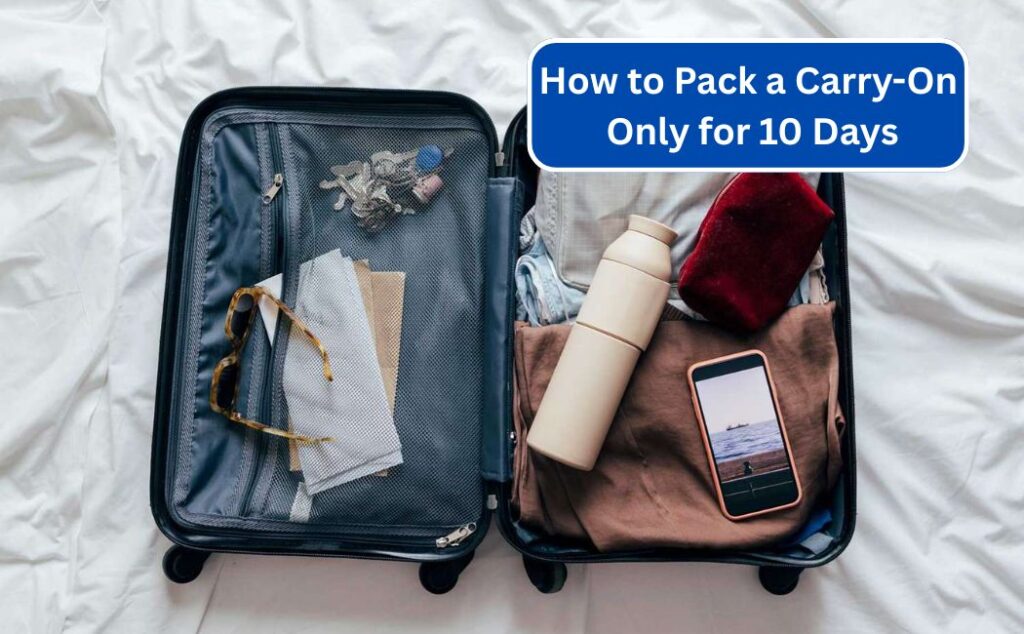
The first time I attempted carry-on-only travel for a longer trip, I stood in the airport baggage drop line for eleven minutes before realizing I didn’t need to be there. That particular victory — walking straight to security while everyone else heaved overstuffed suitcases onto a conveyor belt — is one I’ve been chasing ever since.
I’m going to be honest about where I started: I was a chronic overpacker. The kind of person who packed “just in case” outfits for scenarios that were statistically impossible. Who brought four pairs of shoes for a five-day trip? Who zipped her suitcase on the last night while sitting on it. Moving to Sarasota and building a life around a more intentional, curated coastal aesthetic genuinely changed how I think about clothes — including how I pack them. The same philosophy that drives the coastal home decorating approach I’ve written about here (fewer things, chosen with more intention) turns out to apply directly to a carry-on.
This guide is what I’ve learned, refined, and road-tested — most recently on our Hawaii trip and on planning trips to Europe. Ten days is the sweet spot that forces you to get serious. It’s long enough that you can’t just power through on five outfits without doing any laundry. It’s short enough that you can do it without shipping boxes home. And the discipline it requires produces something genuinely freeing: knowing that everything you need is on your back, and that you can move through airports, trains, and new cities without the friction of a bag that’s too heavy to lift overhead.
Here’s exactly how to do it.
The Mindset Shift That Makes Everything Else Possible
Before we get into the actual clothing numbers, the bag specifications, and the packing cube geometry, there’s a belief that needs to be updated.
Most overpacking isn’t caused by poor logistics. It’s caused by a specific kind of anxiety: the fear of being underprepared. Of not having the right thing. Of ending up at a nice dinner in the wrong outfit. Of needing something you left behind. This anxiety causes people to pack for every possible version of themselves and every possible version of the trip — the version where it rains, and the version where it’s hot, and the version where there’s a formal event nobody mentioned, and the version where you decide on day seven that you actually want to go hiking.
The mindset shift is this: you are not packing for every version of your trip. You are packing for the most likely version, with a few smart contingencies built in. Everything else can be dealt with as it comes — through a quick purchase, a sink wash, or simply accepting that you’ll wear the same dress on Thursday that you wore on Monday and nobody will notice or care.
The freedom of carry-on travel is not just logistical. It’s the freedom that comes from deciding, in advance, that you have enough. That is a genuinely different relationship with packing than most people have, and it’s worth cultivating.
The Framework: The 5-4-3-2-1 Method
The 5-4-3-2-1 method is one of the most proven formulas for carry-on-only travel: five tops, four bottoms, three layers, two pairs of shoes, one dress. Everything mixes and matches, so you end up with 15–20 outfit combinations from just these pieces.
Adapted for 10 days of women’s travel, here is how the formula plays out in practice:
| Category | Items | Notes |
|---|---|---|
| Tops | 5 | Mix of casual, one elevated; all work with all bottoms |
| Bottoms | 3–4 | 1 versatile trousers, 1 jeans/denim, 1–2 skirts |
| Dresses | 1–2 | At least one that goes from day to evening |
| Outer layer | 1 | One that works with everything |
| Shoes | 2–3 | Comfortable walking shoe, versatile flat/sandal, optional third |
| Accessories | Small curated set | See accessories section below |
| Swimwear | 2 | If relevant to destination |
| Underwear | 8–10 | One per day minimum; lightweight, quick-dry |
| Socks | 4–5 | If relevant to the destination |
Total clothing items: 14–20 pieces, depending on destination and purpose.
This sounds like very little. It is, initially, surprising. And then you lay it out on the bed and realize you can create more outfits than you have days.
The trick that most people miss: packing for every possible scenario, version of yourself, and weather possibility, is what leads to overpacking. The solution is to pack for the most likely version of your trip, then trust the capsule to handle the rest.
The Clothing: What to Choose and Why
Tops: Five That Do the Work of Ten
The rule for tops is simple: every top should work with every bottom you’ve packed. If something only works with one outfit, it doesn’t go. Travel is not the time to pack orphans.
For a coastal-leaning, feminine aesthetic, my five tops typically break down like this:
Two simple cotton or linen tanks in neutral tones (white, cream, or a light earth tone). These are your workhorses — they go under every layer, stand alone in warm weather, tuck into skirts, and photograph well in any light. They take up almost no space.
One slightly elevated blouse or button-down in a fabric that doesn’t wrinkle dramatically — linen, light silk blends, crinkle cotton. This is your elevated top: it works with trousers for dinner, with a skirt for sightseeing, layered open over a tank on the beach. A white linen button-down is the single most versatile piece in a travel wardrobe.
One printed or textured top that adds visual interest to the capsule without requiring its own specific pairing. A simple stripe, a subtle pattern, a lightweight knit — something that makes any day-four photo look like you planned a different outfit, when in reality it’s the same jeans you’ve been rotating.
One lightweight knit or fitted long-sleeve for cooler moments: evening breezes, overly air-conditioned restaurants (an absolute constant in Florida and in most hotel lobbies everywhere), the plane itself. This is the piece that makes the capsule work in variable temperatures.
Bottoms: Three to Four, Built for Mixing
One pair of jeans that sit comfortably for hours and don’t stretch out by dinner, then ponte or knit pants for the rest — they pack easily, don’t wrinkle, and feel pulled together without being stiff.
For 10 days, three bottoms are the minimum. Four is comfortable. Five is the beginning of overpack territory.
One pair of well-fitted denim in a dark wash that reads casual or slightly dressed depending on what’s above it. Dark denim’s chameleon quality — it looks intentionally casual with sneakers, intentionally polished with a blazer — makes it the most versatile travel bottom in most wardrobes.
One pair of loose, wide-leg linen or cotton trousers in a neutral (cream, stone, light grey, olive). For a coastal aesthetic, especially, this is the non-negotiable. These pack small, dry fast, look beautiful in every light, and transition from beach-adjacent morning to evening restaurant with total ease. If you’ve read the beach-to-brunch guide on this blog, you already know that linen wide-legs are the coastal travel piece that works hardest for the least effort.
One skirt — midi length and A-line, which gives you movement, photographs beautifully, and can be styled elevated or casual. A cotton or linen midi in a neutral or subtle print works in most contexts, from walking to dinner to a nice lunch.
Optional fourth bottom: a second skirt, denim shorts (for beach destinations), or an additional pair of lightweight trousers if your trip involves significant activity variety.
Dresses: One to Two That Work Harder Than Either
For a 10-day capsule, you need a dress that can move from a casual day to a nice dinner, sometimes with just a shoe swap.
One midi dress in a solid color or simple print that functions as its own complete outfit and as a layering piece over a tank. The dress you can wear with flat sandals for afternoon exploring and then again with gold hoops and better shoes for dinner two days later is the dress worth packing?
One optional second dress if your itinerary includes beach time. A linen or gauze maxi dress worn over a swimsuit is the coastal approach to beach-to-restaurant transitions — and if you’ve been reading this blog, you know it works. See the farmers market outfit guide for the full philosophy on dresses that do double duty.
Outer Layer: One, Chosen Carefully
Don’t pack multiple jackets. Choose one main outer layer that works with everything underneath it. A denim jacket for casual, a knit blazer for something more structured, a lightweight trench if rain is likely.
The trench coat is the highest-versatility single outer piece you can pack — it looks intentional over a dress, polished over trousers and a tank, and functions in both light rain and cool evenings. A packable version in a neutral (classic camel, stone, navy) takes up minimal space and earns its place on almost any trip longer than five days.
A good linen or cotton kimono works beautifully for warm coastal and beach destinations — light enough to roll into almost nothing, versatile enough to function as a cover-up, a layer over a tank, or a lightweight jacket in an evening breeze.
The soft wrap or scarf rule: A soft wrap or cardigan works on the plane, in over-air-conditioned restaurants, and in evenings when the temperature drops. It’s one of those quiet pieces that ends up being used more than you expect. Add one. It weighs almost nothing.
Shoes: The Category Where You Must Be Ruthless
Limit your travel wardrobe, including shoes, to 10 items or fewer. Shoes take up more room than anything else in the bag.
Three pairs maximum. Wear the bulkiest on the plane.
One cushioned walking shoe or comfortable sneaker. Not your fashion sneaker. Your actual walking shoe — the one you’ve worn all day without thinking about your feet. For 10 days of travel, your feet are going to cover more ground than a typical week at home. Comfort is not negotiable here. You don’t need heels for sightseeing. You need stamina.
One versatile flat, sandal, or espadrille that elevates any outfit past the casual register. A leather flat sandal with a cushioned footbed. A simple espadrille in a warm neutral. A ballet flat that works with trousers and skirts. This is your dinner shoe, your daytime errands shoe, your farmers market shoe — and if it has any arch support, all the better.
One optional third shoe for specific needs: a beach sandal (if spending significant time near water), a slightly more formal heeled sandal (if the trip includes events), or waterproof shoes for rain-likely destinations. If you can’t justify the third pair by specific need, leave it at home.
The Fabric Philosophy: What Makes Carry-On Travel Actually Work
This is the section most packing guides skip, and it’s the one that changes everything.
Merino wool is good at repelling odors and regulating temperature, while synthetic performance fabrics are good at wicking sweat. For warm-weather travel, focus on pieces that are breathable.
The fabrics that work for carry-on travel across 10 days are those that share several properties: they don’t wrinkle in a suitcase, they dry quickly when washed by hand or in a hotel sink, they regulate temperature across a range of conditions, and they don’t hold odors between wears.
Linen is the coastal traveler’s best friend and works beautifully in warm weather — it breathes, it looks better slightly rumpled, and it washes and dries faster than cotton. The wrinkle it develops with wear reads intentional rather than sloppy.
Merino wool is the counterintuitive choice for warm-weather travel and the correct one for year-round versatility. A merino t-shirt or tank can be worn three days in a row without washing and without odor — this is not marketing, it’s genuinely the most remarkable property of the fiber. It’s also temperature-regulating, which means a merino layer keeps you comfortable in both a 75°F afternoon and a 68°F restaurant. The cost is real (expect $50–$100 per piece from quality brands like Icebreaker, Uniqlo’s merino line, or Quince), but the versatility is equally real.
Wrinkle-resistant synthetics and blends (nylon-spandex, modal, bamboo) pack small and emerge from a carry-on without needing a steamer. For trousers and skirts specifically, these materials are worth seeking over pure cotton.
What to avoid: Heavy 100% cotton (denim excluded), anything requiring dry cleaning or special care, fabrics that absorb odors quickly, and anything that needs ironing before it looks right.
The Laundry Strategy: How 10 Days Fits in 7 Days of Clothes
The reason carry-on-only works for 10 days on 7-day quantities of clothes is laundry.
You don’t have to replace your entire closet. Your packing list should include enough items for one week’s worth of outfits. When you travel for longer than a week, do laundry.
There are three realistic laundry options for 10-day carry-on travel:
Sink washing. Merino wool, synthetics, and lightweight cotton all sink-wash easily. Fill the hotel sink with warm water and a small amount of liquid soap (Dr. Bronner’s travel soap or a tiny container of Woolite works perfectly), swish the garment for two minutes, rinse, roll in a towel to absorb water, and hang overnight. Most lightweight fabrics are dry in 6–8 hours in a hotel room with any air circulation. Heavier fabrics (denim, thick cotton) take longer and are not ideal for sink washing on the go.
Laundromat. In any city of reasonable size, a self-service laundromat exists and costs $5–10 to run a full load. Plan one laundry morning around day five or six. Two hours, an English-language podcast, and all your clothes are fresh for the back half of the trip. This is the most underrated travel activity that nobody plans for.
Hotel laundry service. Expensive but convenient. Worth using for one or two items that need professional cleaning mid-trip — a silk blouse, a dress you want to wear again. Not worth using for a full load.
The practical planning: bring 7–8 days of underwear and socks (lightweight, quick-dry options take up minimal space), and plan a laundry day around the midpoint of the trip. Wear items two or three times between washes — this is normal and expected in travel, and it’s why fabric choice matters so much.
The Accessories: Small Curated Set, Maximum Return
Accessories depend on the trip. On the beach, a sun hat and swimsuit. City trip? A crossbody bag and a fun necklace. A scarf is surprisingly useful — it keeps you warm on planes and lets you change up an outfit without adding bulk.
The accessories that earn their space in a carry-on:
One crossbody bag in a neutral — tan, camel, black, or a warm terracotta — with a strap long enough to wear across the body and adjustable enough to wear shorter. This is your daytime bag: it holds your phone, cards, and a folded scarf. At a lighter capacity, a raffia or woven bag for coastal destinations adds texture and reads immediately as intentional.
Two or three scarves. Scarves are miracle workers. They change the mood of a simple tee, add color near your face in photos, and take up almost no space. You can build entire travel wardrobes around a neutral base and let the scarves do the heavy lifting. A silk square, a lightweight cotton rectangle, and a soft wrap: these three pieces together weigh less than a sweater and produce more outfit variety than an extra pair of shoes.
A curated jewelry set. Gold hoops in two sizes. A thin layered necklace or two that can be worn stacked or alone. One bracelet or a thin anklet. These go in a small zip pouch and weigh almost nothing. Don’t bring anything irreplaceable — optional earrings should be simple studs or small hoops that will go with multiple outfits; don’t bring anything valuable.
Sunglasses that work with everything. One pair, polarized if you’re near water (see the Gulf Coast packing list for the full case for polarized lenses near reflective water), in a neutral frame — tortoiseshell, classic black, or warm gold. Sunglasses are part of the outfit, not just sun protection. Choose a frame you’ll wear every day and mean it.
A packable hat. For coastal and warm destinations, a wide-brim straw or structured sun hat that either packs flat or can be worn on the plane. Protect your face from the sun, complete every outdoor outfit. A hat clip (a small carabiner-style attachment) lets you clip it to your bag when you don’t need it.
The Bag: What Actually Fits and What Doesn’t
Carry-on size restrictions vary by airline and are notoriously inconsistent, but the standard most major U.S. airlines enforce is 22 x 14 x 9 inches for overhead bin luggage. Internationally, restrictions often tighten — especially on budget European carriers like Ryanair and EasyJet, where the standard can be as small as 20 x 16 x 8 inches, and enforcement is genuine.
Always check the specific airline’s carry-on dimensions before packing for international trips. This is the step most people skip and then regret at a gate in Milan.
The rolling carry-on — a hard-shell or softside spinner in the 21–22 inch range — is the most intuitive choice and the most practical for the clothing volume described in this guide. The Away Carry-On, Monos, Béis, and Calpak are the most consistently recommended brands in the lifestyle travel space. Look for four spinner wheels (so you can roll alongside you rather than dragging), a TSA-approved lock, and an exterior pocket for documents and essentials.
The travel backpack — 30–40L — is the choice for carry-on travel that also involves significant moving between accommodations, public transit, and non-hotel stays. A backpack is easier to maneuver on buses, trains, and up hostel stairs than a roller. It is also slightly harder to pack as neatly. The Tortuga Outbreaker and the Osprey Farpoint are consistently recommended for this use case.
Packing cubes: Non-negotiable. Packing cubes keep items organised and secure during the trip and can comfortably fit in carry-on bags. They also compress clothing (compression cubes specifically), allow you to locate items without emptying the bag, and provide a system that makes repacking at every destination take five minutes rather than twenty. Use one cube per clothing category: tops, bottoms, dresses/outer layers, underwear, and socks. A separate clear zip pouch for toiletries, a small zip bag for electronics and cables, and a document pouch for passport and boarding passes complete the organization system.
Toiletries: The 3-1-1 Reality Check
Every liquid, gel, aerosol, cream, and paste must be in containers of 3.4 ounces (100ml) or less, all fitting in a single one-quart (one-liter) zip-lock bag per traveler. This is the TSA 3-1-1 rule, and it is real and enforced.
For 10 days, the 3-1-1 bag must contain everything you won’t buy at your destination. Here’s how to make it work:
Decant everything. Travel-sized containers in matching sets (GoToob, Muji’s travel containers, or similar silicone squeezable bottles) filled with your actual products are better than buying generic travel-size versions. You know exactly what’s in them.
Buy what you can at the destination. Shampoo, conditioner, body wash, and sunscreen — all bulky, all available at any pharmacy in any country you’re likely to visit. Leave them at home and buy them on day one. Reef-safe sunscreen is the exception: if you’re heading to a beach destination, bring what you know works rather than gambling on what’s available. See the Gulf Coast packing list for the full case for mineral SPF in particular.
Solid alternatives. Solid shampoo bars, solid conditioner bars, solid soap, solid sunscreen sticks, and solid moisturizers don’t count as liquids and don’t go in the 3-1-1 bag. For 10 days of hair washing and skin care, switching some products to solid format frees significant space in the liquids bag.
Makeup: The most personal calculation in any packing list. For a carry-on-focused approach, a tinted SPF moisturizer, a cream blush/bronzer, a mascara, a lip product, and a brow pencil covers 90% of daily makeup needs in a fraction of the space of a full face routine. Everything in cream formula, applied with fingers rather than brushes, takes up a fraction of a makeup bag’s usual contents.
The System: How to Actually Pack It
Step one: Lay everything on the bed. All of it, everything you’re considering. Then remove one-third of it before putting anything in the bag. This is the step most people skip, and it’s the most important one.
Step two: Build outfits, not items. Before anything goes in the bag, confirm that every piece creates at least three outfit combinations with other pieces in the pile. If something only pairs with one other thing, it doesn’t earn its space.
Step three: The shoe test. Put both (or three) pairs of shoes in the bag first. See what space remains. Pack the clothing around the shoes, not the other way around.
Step four: Roll, don’t fold. Rolling clothes reduces wrinkles and saves space compared to folding, particularly for soft fabrics. Heavier items (jeans, structured blazers) fold flat on the bottom. Everything else rolls.
Step five: Wear the heaviest things on the plane. Your bulkiest shoes, your denim, your thickest outer layer. What’s on your body doesn’t count toward carry-on weight.
Step six: The final check. Zip the bag. Pick it up. If you can lift it comfortably into an overhead bin by yourself, it passes. If you need help, something comes out.
Final Thoughts
Here is what I want you to know before you start: you will not miss the things you didn’t pack. I have never, on a single trip, reached the end of it wishing I’d brought the fourth pair of shoes or the sixth outfit. I have, several times, reached the end of a trip wishing I’d packed less.
The version of you that exists on day eight of a trip — navigating a train station, carrying everything you own, moving fast — is grateful for the version of you that made hard decisions ten days earlier at the kitchen table. The bag that goes overhead in 15 seconds is not a compromise. It’s a form of care for your traveling self.
The luxury vs budget travel post I wrote for this blog made the case that the best travel is intentional — choosing what you’re spending on based on what actually enriches the experience, rather than on habit or anxiety. Carry-on-only packing is the same philosophy applied to your luggage. Fewer things, chosen deliberately, so you can move freely and be fully present in the places you’ve traveled to reach.
Pack accordingly. Then go.
If you’re planning a Gulf Coast trip and want the beach-specific version of this packing system, the Gulf Coast summer packing list covers everything from reef-safe sunscreen to Turkish beach towels with the same level of detail. And if this post helped you finally commit to the trip you’ve been putting off, I want to hear about it — drop it in the comments.

Welcome to my blog!
Meet Hannah Katherine, the creative voice behind Lifestyle, a blog dedicated to finding beauty and balance in everyday living. A former interior stylist turned full-time content creator, Sophie blends her love for cozy home design, mindful travel, and self-care into heartfelt stories that inspire readers to slow down and savor the little moments..