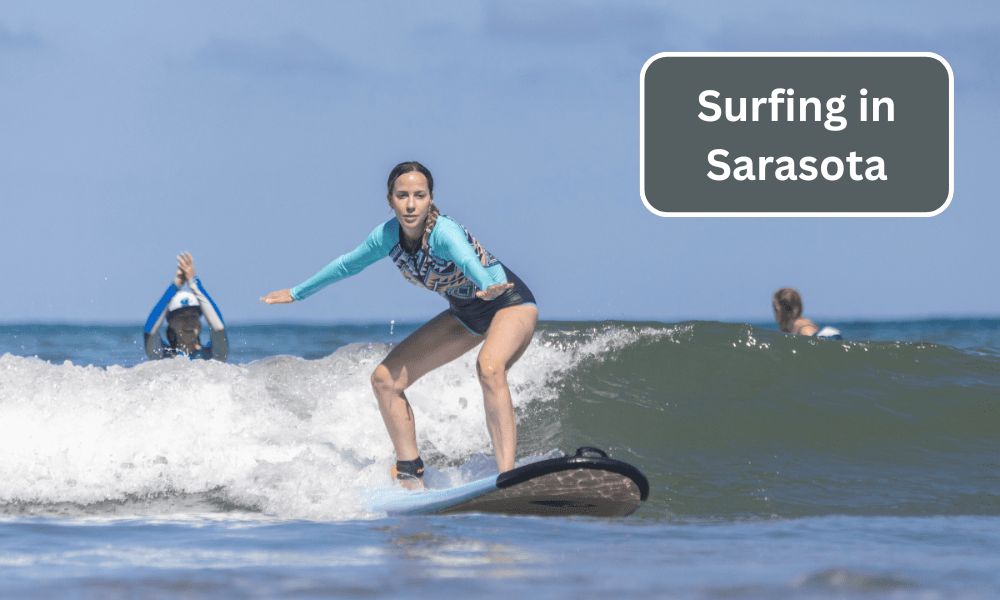
Let me tell you about the first time I stood up on a surfboard in Sarasota.
The wave was maybe two feet tall. Maybe. It was warm, it was gentle, and it had absolutely zero intention of being dramatic. I paddled in. I popped up. I lasted approximately three seconds before nose-diving into the most forgiving water I’ve ever fallen into. The Gulf just kind of absorbed me — warm, calm, barely four feet deep — and I floated back to the surface laughing, with zero injuries and an enormous amount of saltwater in my nose.
I did it again. And again. And by the end of the afternoon, I’d ridden a total of four waves, wiped out on six, and spent the rest of the time just floating in the Gulf thinking: this is exactly what I needed.
That’s Sarasota surfing. It’s not Hawaii. It’s not California. It’s not even Cocoa Beach. But it has warm water, a small local surf community that actually enjoys it, and — on the right day, with the right swell — waves that are genuinely fun to ride.
This guide tells you everything you need to know before you show up with a board.
The Honest Truth About Surfing in Sarasota
Before we get into surf spots and lesson prices, I want to be upfront about something — because I’d rather give you accurate expectations than oversell this and have you show up in July hoping for Pipeline.
The Gulf of Mexico is not an ocean surf destination. The Gulf’s waves are smaller, shorter, and less consistent than the Atlantic or Pacific because the water has less distance to build up energy. Most days in Sarasota, the Gulf is flat or close to it. When waves do show up, they’re typically 1 to 3 feet. On a really good storm swell day — during hurricane season or a strong winter cold front — they can push 4 to 6 feet, and occasionally more.
Here’s the thing though: those days are genuinely fun. And when they happen, the water is warm, the crowd is smaller than any East Coast beach break, and the local surfers who catch it treat it like gold.
Waves on this coast don’t last days — they last hours. You need a flexible schedule. You need to check conditions daily. And you need to find the right spots — because the geography of Sarasota’s coastline means that some beaches almost never get surf, while others become reliable breaks when the conditions align.
This guide tells you exactly which spots those are.
The Best Surf Spots in and Around Sarasota
1. Venice North and South Jetty — The Premier Spot
Venice Inlet, Venice (about 15–20 miles south of Sarasota)
The North Jetty Beach in Nokomis and South Jetty Beach in Venice remain the premier spots for surfing in Sarasota County. The jetties create a reliable break when there’s a west or northwest swell.
If you can only go to one spot, make it the Venice Jetty system. The 500-foot jetties at Venice Inlet act as natural wave shapers — blocking wind from one direction, focusing the swell, and creating cleaner waves than you’ll find on most of the open beach nearby.
It’s a beach break that breaks north of the jetty. Sandy bottom, so it’s a nice wave for beginners. Gets really busy, so watch what you’re doing. Locals are friendly. Starts breaking on a small swell and only gets big when storms are coming in.
The wave produces lefts and rights — not the most powerful wave in Florida, but fun and accessible. The sandy bottom makes wipeouts far less punishing than reef breaks, which is a real plus for anyone still learning.
The north vs. south decision: If the wind has any strength and it’s coming out of the north, then you hit the south jetty. The counter is true — if the wind is coming out of the south, the north jetty is the place to be. When a cold front pushes from the north, head south. Tropical swell from the south or southwest pushes the action north. Pay attention to the wind before you go.
What you need to know:
- Sandy bottom — beginner-friendly
- Gets crowded when it’s working — respect the lineup
- Best in hurricane season (June–November) and winter cold fronts
- Venice is the Shark Tooth Capital of the World for a reason; this isn’t a reason to panic, but it is a reason to be aware
- Parking available at the Venice Jetty area
- Surfboard rentals available nearby through Jetty Rentals: (941) 525-0117
2. North Jetty Beach, Nokomis — The More Local Alternative
Casey Key Road, Nokomis (about 14 miles south of Sarasota)
The North Jetty at Nokomis is the other end of the same jetty system and picks up similar swell conditions. The jetties create a reliable break when there’s a west or northwest swell.
What’s different here: the crowd is a little thinner than Venice Jetty when it’s really working, and the vibe is noticeably more local. The beach at Nokomis also has its own character; the wide-open beaches of Nokomis Beach are also great for skimboarding, which is where the annual Spring Fling Skim Jam takes place.
The drum circle at Nokomis on Wednesday evenings means there’s always a good reason to be at this beach at sunset, whether the surf is up or not.
What you need to know:
- Works on W-NW swells — similar conditions to Venice Jetty
- Less crowded than Venice when it’s working
- Friendly local crowd
- Large free parking lot
- Good for beginners on small-to-medium days
3. Lido Beach — The Convenient Sarasota Pick
Ben Franklin Drive, Lido Key (right in Sarasota)
South on Gulf Side Drive leads you into Sarasota and Lido Beach, which, if you look at a map, is located just north of the elbow and breaks on a west swell with a north wind. The best spot is just south of the public beach. Good access.
Lido Beach is the most convenient surf spot in Sarasota proper — no 20-minute drive south, no parking strategy, just park at the beach and walk. Lido Beach is a public favorite for locals and visitors, especially during hurricane season or winter cold fronts.
The waves here are softer and more forgiving than the jetty spots. This makes Lido one of the best places in the area to take a beginner lesson or to surf for the first time. The water is calm enough to learn in, but when a real swell runs through, it picks up nicely.
The other bonus: Lido Beach is half a mile from St. Armands Circle. Post-surf brunch is a very real, very achievable option here.
What you need to know:
- Works best on west swell with north wind
- More forgiving than the jetty spots — ideal for beginners
- Good access and parking (400 spaces)
- Best during hurricane season and cold fronts
- Easy beach-to-brunch situation right after
4. Turtle Beach — For Skimboarders and Winter Swells
Southern end of Siesta Key
The coarser sand and steeper drop-off of Turtle Beach make it the top choice for skimboarders looking for shore break waves.
For traditional surfing, Turtle Beach is more of a specialist pick. Turtle Beach works on winter so it’s a winter cold front spot rather than a year-round option. When a strong northwest swell runs through between November and March, Turtle Beach gets short, punchy shore break that’s genuinely fun.
But this beach earns its place on this list most of all for skimboarding — the coarser sand, steeper drop-off, and consistent shore break make it one of the best skim spots in Sarasota County. If you’ve never tried skimboarding, Turtle Beach is the place to start.
What you need to know:
- Best for winter NW swells (November–March)
- Top skimboarding spot in Sarasota County
- 207 free parking spaces
- Significantly less crowded than Siesta main beach
- Also great for shelling and kayaking if the surf isn’t cooperating
5. Siesta Key (Various Access Points)
Siesta Key needs summer S or W swells, as it is protected from the N swells and winds.
The main Siesta Beach — America’s #1 beach for 2026 — is not known as a surf spot. The wide, shallow approach and the beach’s orientation mean it needs very specific conditions to produce rideable waves. On summer days when a south or southwest swell runs through, local surfers do show up. But it’s an occasional bonus, not a reliable destination.
If Siesta Key surfing is on your list, go in summer, look for south or southwest swell, and manage expectations.
When Is the Best Time to Surf in Sarasota?
This is the most important question, and the answer depends on what kind of waves you want.
Hurricane Season: June to November — The Best Swells
This is Sarasota’s prime surf season. Venice Beach is best during hurricane and storm seasons at all tides. Tropical systems developing in the Gulf or the Caribbean push groundswell energy toward the coast that can produce some of the most consistent and powerful waves the Gulf sees all year.
You don’t need a direct hit from a hurricane to get good surf — in fact, you don’t want one. A tropical storm or depression tracking 200–400 miles offshore can generate 3- to 6-foot waves with clean form. That’s considered a genuinely good day on the Gulf Coast.
The tradeoff: summer is hot, humid, and stormy. Afternoon thunderstorms roll in most days between June and September. Check the weather and the surf forecast together — lightning and surfing are not a combination.
Winter Cold Fronts: November to March — The Second Season
When cold fronts push down from the north, they generate northwest swells that activate spots like Turtle Beach, Nokomis Jetty, and Venice. The water is cooler (low-to-mid 60s°F in January and February — cold enough that a shorty wetsuit or spring suit is welcome), but the waves can be clean and more consistent than summer’s storm-dependent surf.
The best time of year for surfing Venice North and South Jetty with consistent clean waves is during winter, and most often the month of January. Winter is when local surfers know where to be.
Spring and Early Summer: April to May — Mostly Flat
Honest answer: spring is generally flat. This is the post-cold-front, pre-hurricane window when the Gulf sits glassy and calm for weeks at a time. It’s gorgeous for swimming, paddleboarding, and kayaking. It’s not great for surfing.
If you’re visiting in spring and surfing is a priority, don’t let that stop you from taking a lesson — Lido Beach in small conditions is actually perfect for first-timers — but temper expectations about actual waves.
How to Check Surf Conditions in Sarasota
Never just show up and hope. Check conditions first.
Surfline (surfline.com): The most trusted surf forecast tool in the US. It has specific reports for Sarasota County, Venice Jetty, and nearby breaks. The free version is useful; the premium version gives you more detailed hourly forecasts.
Magicseaweed (magicseaweed.com): Another reliable forecasting tool with good Gulf Coast coverage.
Tides4fishing.com: Useful for combining tide charts with surf conditions — important because tide affects how waves break at the jetty spots.
Local surf shops: The best real-time intel always comes from people who were just in the water. Call Compound Boardshop or stop by Jetty Rentals and just ask. Local surfers will tell you honestly whether it’s worth the drive.
Before you get in the water, understanding the beach flag system is genuinely important. The beach flag guide covers what every flag color means — from green (all clear) to red (high hazard) to purple (marine pests). Checking the flags when you arrive takes ten seconds and matters, especially during hurricane season when conditions can shift fast.
Surf Lessons in Sarasota: Where to Learn
If you’ve never surfed before — or if you’ve tried and want actual instruction instead of just guessing — Sarasota has good lesson options. The small waves here are genuinely ideal for learning. You won’t be fighting 8-foot beach break while trying to figure out how to pop up. You’ll be learning in warm, forgiving water with enough wave action to actually practice.
SURFIT USA — Most Established Sarasota Surf School
Phone: (941) 952-8245 | Website: surfitusa.com
SURFIT USA is a family-owned, family-operated surf school based in Sarasota. They’re Academy of Surfing Instructors (ASI) accredited, which means real credentials behind the instruction. They offer both private and group lessons, and also run stand-up paddleboard (SUP) lessons for those who want something a little more stable to start.
The family-owned feel here matters — you get actual instructors who live on this coast and know these conditions, not a large anonymous operation.
Forward Motion Sports — Windsurfing and Foil Specialists
Website: fwdmotionsports.com
Forward Motion Sports covers the South Sarasota, Nokomis, Venice, and Englewood area and specializes in wing foil, windsurf, and foil lessons. If traditional surfing isn’t the right fit — or if you want to try something more advanced — their lesson menu is extensive. They offer demo gear too, so you can try before you commit to a full rental.
Paradise FitSurf — Surf and Fitness Combined
Website: paradisefitsurf.com | Coverage: Venice, Sarasota, Bradenton, Nokomis
Paradise FitSurf is a unique combination of personal training and surf lessons. They cover a wide area of the central Gulf Coast and work well for visitors who want instruction structured around their skill level and fitness. Good option if you want a smaller, more personalized lesson format.
Sister Jo’s Surf School
Listed consistently in Sarasota’s top surf schools, Sister Jo’s offers beginner-focused instruction in a relaxed, fun environment. Good for families, particularly those with kids who want to try surfing for the first time.
General Lesson Tips
- Book in advance during summer. Hurricane season means waves can appear with short notice, and when conditions are good, lesson slots fill up fast.
- Private lessons are worth it for first-timers. Group lessons are less expensive, but a private lesson means your instructor is watching only you.
- Ask about conditions when you book. A good instructor will adjust the location and timing based on that day’s surf — that flexibility is part of what you’re paying for.
- Wear reef-safe sunscreen before you get in the water. Not after. Before. Gulf Coast UV exposure is intense, and the water doesn’t protect you.
Board Rentals and Surf Shops
Compound Boardshop — Sarasota’s Best Surf Shop
Phone: (941) 552-9805 | Website: compoundboardshop.com | Established: 2003
Compound Boardshop has been the go-to surf shop in Sarasota since 2003. They carry foam, fiberglass, and wood boards, along with everything else you need: leashes, wax, wetsuits, fins, and apparel. They’re genuine surf people who know the local spots and will tell you honestly where to go on any given day.
If you’re buying your first board in Sarasota, this is where to go. If you’re looking for something to rent by the hour or the day, call ahead and ask.
Jetty Rentals — Venice Area Rentals
Phone/Text: (941) 525-0117 | Website: venicejetty.com
Jetty Rentals is right at the action near the Venice Jetty and offers hourly to multi-day rentals of surfboards, paddleboards, and kayaks. If you’re heading down to Venice for a surf day, they make the logistics simple. No need to drive a board from Sarasota — rent it there.
CaliFlorida — Siesta Key Surf Apparel and Rentals
Located on Siesta Key, CaliFlorida carries local surf apparel and offers rentals with a price-matching policy. Good option if you’re based on the key and don’t want to drive further for gear.
Practical Tips for Surfing in Sarasota
Check conditions the night before AND the morning of. Surf forecasts change fast on the Gulf. A promising evening report can change completely by dawn if the wind shifts. Check Surfline or Magicseaweed both times.
Bring your own board if you can. Rental availability at peak surf moments is limited. If you have a board and can transport it, do it. A longer, floatier longboard (8–10 feet) is ideal for Gulf waves — the extra volume helps you catch the smaller, slower swells.
Use a soft-top or longboard for Gulf surfing. Short boards need power and speed to function well. Gulf waves are slower and smaller than ocean swells. A longboard or foam soft-top lets you catch more waves and stay in the water longer.
Wax for warm water. Florida water temperatures range from the low 60s°F in winter to the mid-80s°F in summer. Use tropical wax in summer (melts at higher temps) and warm-water wax in winter. Using cold-water wax in summer heat will turn it to butter on your deck within an hour.
Wetsuit guidance:
- June–October: Board shorts and a rash guard are fine. The water is warm.
- November–December: A 2mm shorty wetsuit is comfortable.
- January–March: A 3mm spring suit or full wetsuit keeps you in the water longer. Water temperatures can drop to the low 60s°F on cold front days.
Respect the lineup. Sarasota’s surf community is small and friendly, but the same etiquette rules apply here as anywhere. Don’t drop in on someone else’s wave. Take turns. If you’re new to lineup etiquette, the basic rules are easy to find online — a few minutes of reading makes you a better surf neighbor immediately.
Swim parallel if caught in a rip. Rip currents exist near the jetties. If you feel yourself being pulled offshore, don’t fight it by swimming straight back to shore. Swim parallel to the beach until you’re out of the current, then swim in at an angle.
Watch the sky in summer. Afternoon thunderstorms in Sarasota build fast from June through September. The moment you see lightning, get out of the water immediately. No exception.
What to Wear for a Sarasota Surf Day
Your surf day wardrobe lives on a spectrum from purely functional to function-plus-vibe. Here’s what actually works:
In the water:
- A quality rash guard or surf shirt (UPF 50+) for sun protection
- Board shorts or a bikini that won’t move when you wipe out
- Reef-safe sunscreen on every exposed surface — reapply after being in the water
On the beach:
- A cover-up that you can wear straight from the beach to wherever you go next
- Flip-flops or water sandals that can handle both sand and a parking lot
- A hat with a brim for the time you spend out of the water
The what to wear in Sarasota guide covers the full beach-day wardrobe in detail — including the cover-up combinations that work for going straight from a surf session at Lido Beach to St. Armands Circle for lunch. And the beach to brunch outfit guide has the specific formulas for making that transition seamless.
For summer surf days, the what to wear in Florida in summer guide is worth a read before you pack — the right fabrics make a real difference when you’re moving between the water and the heat of a Sarasota summer afternoon.
Surfing With Kids in Sarasota
The small, warm waves of the Gulf are actually one of the best environments in the country for introducing kids to surfing. There’s nothing intimidating about Lido Beach on a small summer swell day — the water is shallow, warm, and forgiving, and a surf lesson in those conditions is genuinely achievable for kids as young as 6 or 7.
Sister Jo’s Surf School and SURFIT USA both have experience working with younger surfers. Private lessons for kids let the instructor adjust the pace and keep the whole session fun rather than stressful.
If the waves aren’t cooperating when you visit with kids, skimboarding at Turtle Beach or Nokomis is a great alternative — shorter learning curve, same beach fun, and no need for real surf conditions. The best things to do in Sarasota with kids cover the full range of water and non-water activities to build a great family day around.
After the Surf: Where to Go
The best thing about surfing Lido Beach is that St. Armands Circle is a five-minute walk. Rinse off at the beach shower, swap flip-flops for your leather sandals, throw on your cover-up, and walk to Café L’Europe or Speaks Clam Bar for a post-surf lunch that doesn’t remotely feel like it follows a surf session. That’s a Sarasota thing.
If you surfed Venice Jetty, the drive back up to Sarasota opens up the whole city. The best restaurants in Sarasota covers everything from a quick casual lunch to a proper evening at Indigenous or Selva Grill — good motivation for a morning in the water.
And if you’re building a full Sarasota trip around beach time, surf days, and everything else the city offers, the complete Sarasota beaches guide covers every beach in the area — not just surf spots, but the full picture of where to go for shelling, swimming, kayaking, and the Sunday drum circle.
For help figuring out where to base yourself during your trip — whether to stay on Siesta Key close to the beach or downtown for easier access to restaurants and culture — the Airbnb vs. hotel guide for Florida trips makes the comparison honestly.
Planning Your Sarasota Surf Trip
If Sarasota is just one part of a larger Gulf Coast trip, the Sarasota vs. Fort Myers comparison and the Sarasota vs. Naples guide help you figure out where to base yourself and how to split your time between the three cities. Each has a different character — Sarasota’s surf scene, limited as it is, doesn’t exist in Fort Myers or Naples in the same way.
The Bottom Line
Surfing in Sarasota is a Gulf Coast thing, not an ocean thing. The waves are small, the community is tight, the water is warm, and on the right day — when a tropical system has pushed groundswell across the Gulf or a cold front has stacked northwest wind long enough to build something rideable — it’s actually really good.
But mostly? It’s warm water, forgiving conditions, and the particular pleasure of floating in the Gulf of Mexico with nothing immediately pressing.
I learned that the first time I stood up for three seconds and nose-dived straight into the bottom.
It was perfect.
For the full picture of Sarasota beaches, restaurants, and things to do, Belle on the Boardwalk has everything in one place.

Welcome to my blog!
Meet Hannah Katherine, the creative voice behind Lifestyle, a blog dedicated to finding beauty and balance in everyday living. A former interior stylist turned full-time content creator, Sophie blends her love for cozy home design, mindful travel, and self-care into heartfelt stories that inspire readers to slow down and savor the little moments..